
This is a guest tutorial by Joseph Lu. Check out some of his other tutorials at Clip Studio Tips.
Hi! In this tutorial, I’ll guide you step by step on how to draw anime hair correctly using Clip Studio Paint software. Check out the tutorial video here, or keep reading for the full tutorial.
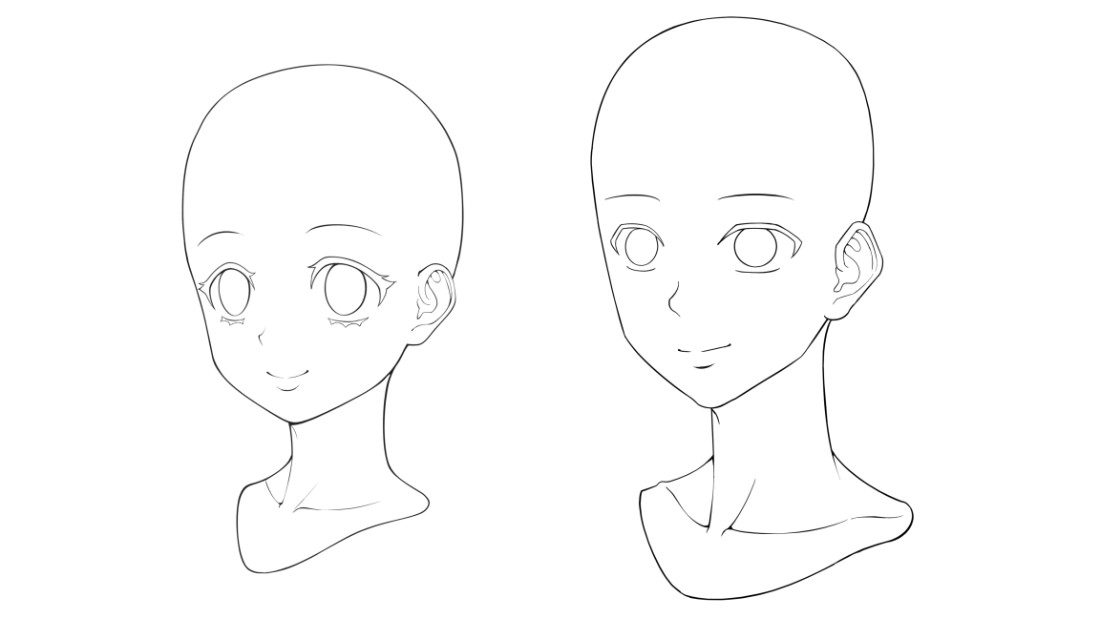
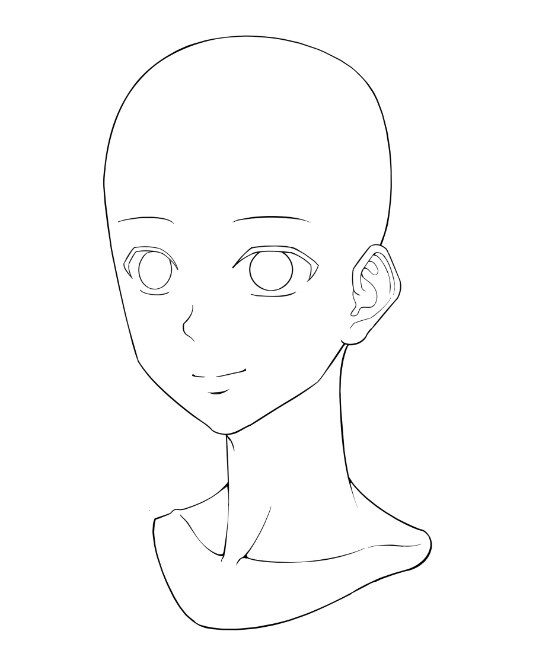
Before we start, prepare your own anime head drawing. Alternatively, you can download my head drawing at this link and follow along with me.
Preparing Line Art
Once you’ve downloaded the file and opened it in Clip Studio Paint, go to Edit → Convert Brightness to Opacity. This is a convenient way to remove the white background and keep only the line art. Then, create a new layer underneath the line art layer and fill it with white to use as the background. Now everything is set up and ready for us to start learning drawing hair.
Common Beginner Mistake #1: Skipping the Scalp
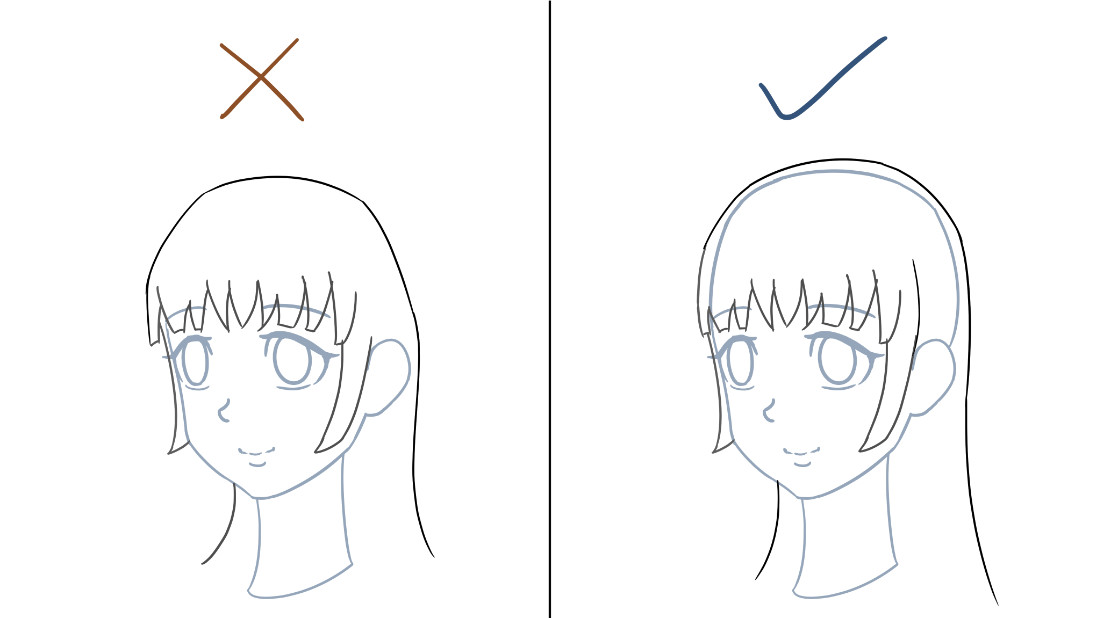
A common mistake beginners make is drawing the hair without first establishing the scalp or base shape. Hair grows on top of the scalp, not directly from the face outline. If we skip this step, the entire hairstyle can end up looking flat or incorrectly positioned.
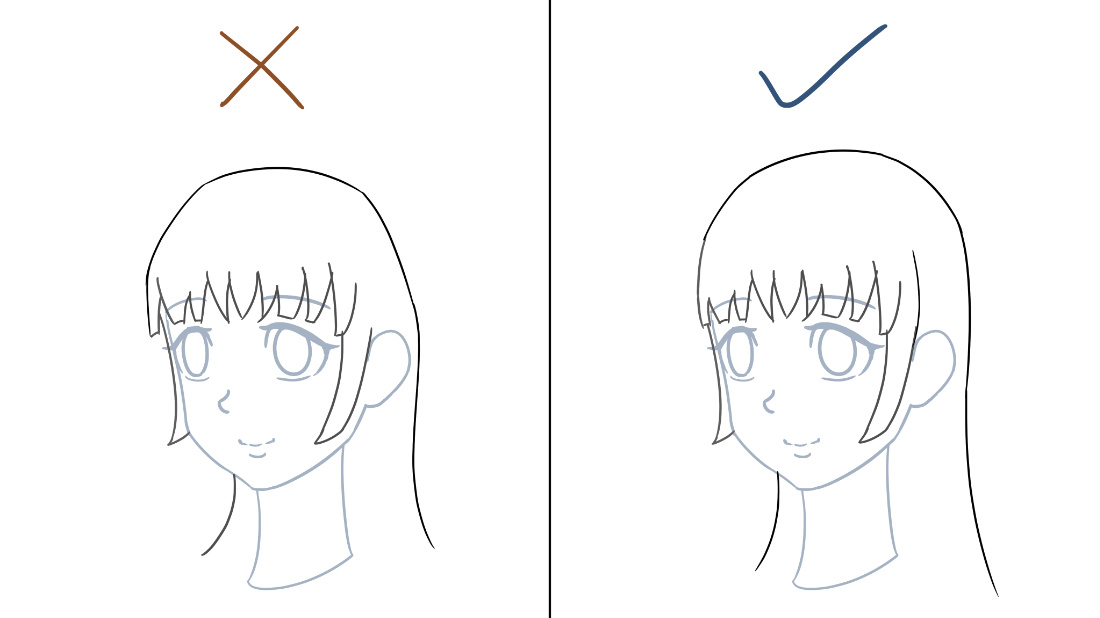
I like to think of the scalp as the foundation for the hairstyle. By sketching it first, it becomes much easier to wrap the hair naturally around the head. We can then erase the scalp at the final stage. Lets focus on the anime girl character first.
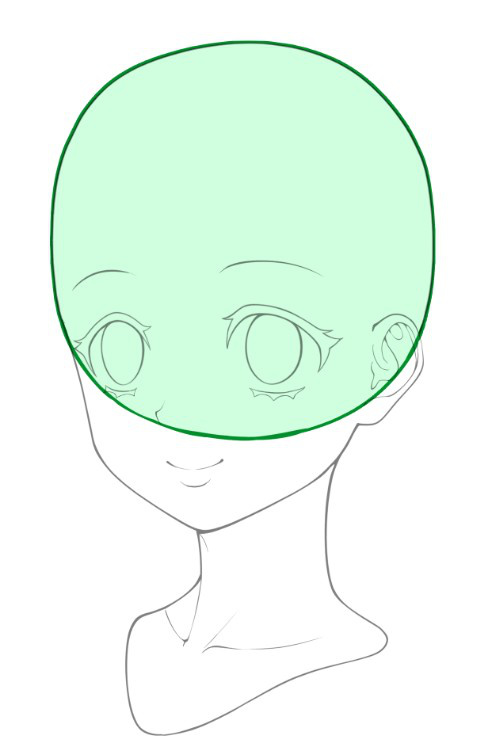
Step 1: Make Sure the Scalp Is Drawn First
Make sure to draw the scalp if you are using your own anime head drawing. In anime-style drawing, the scalp is usually simplified into a round or circular shape. This circle represents the top and back of the head and helps guide where the hair should sit.
Common Beginner Mistake #2: Drawing Hair Strand by Strand from the Start
It’s tempting for beginners to fill the hair with lots of small lines, but this often makes the hairstyle look flat and messy, and it becomes harder to control the overall hair design.
Instead, mark the hair whorl first, then focusing on designing the overall flow of the hair using larger hair chunks. I’ll explain this more clearly in the next two steps.
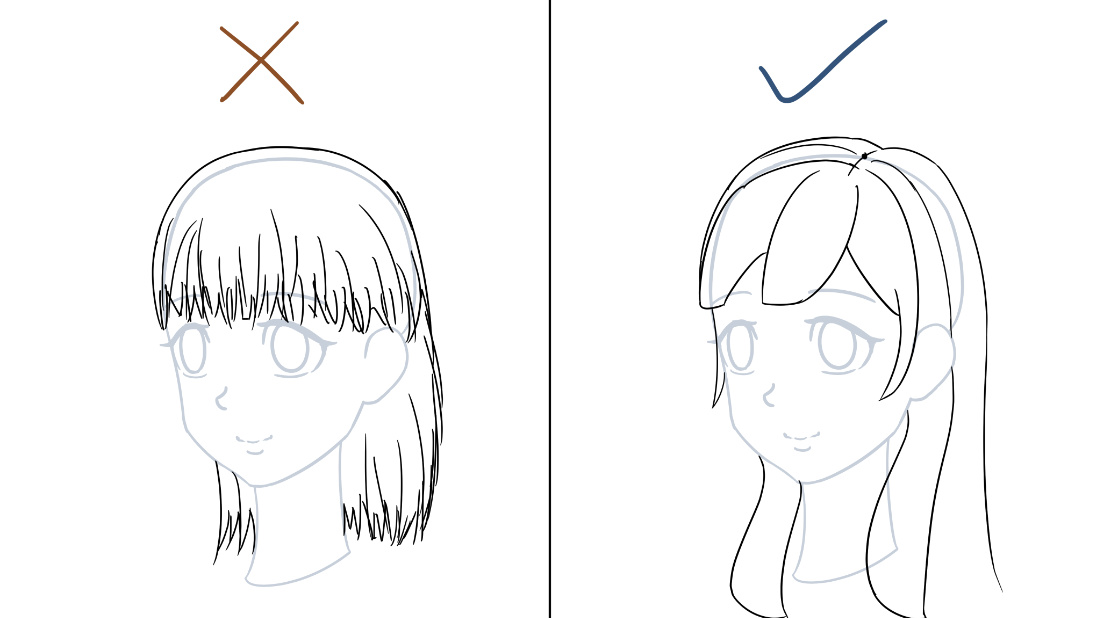
For now, try to avoid drawing individual hair strands right from the beginning. It doesn't typically lead to good hair design.
Step 2: Mark the Hair Whorl
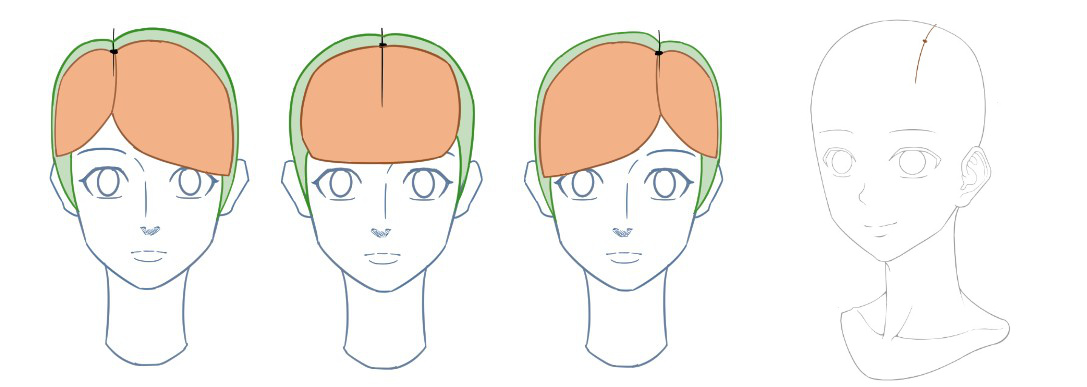
Hair does not grow straight down evenly from the entire scalp. Instead, it usually spreads outward from a specific area on the top of the scalp. When viewed from a high angle, you can see that the hair grow from a line or point, which is called the hair whorl (highlighted in red below).
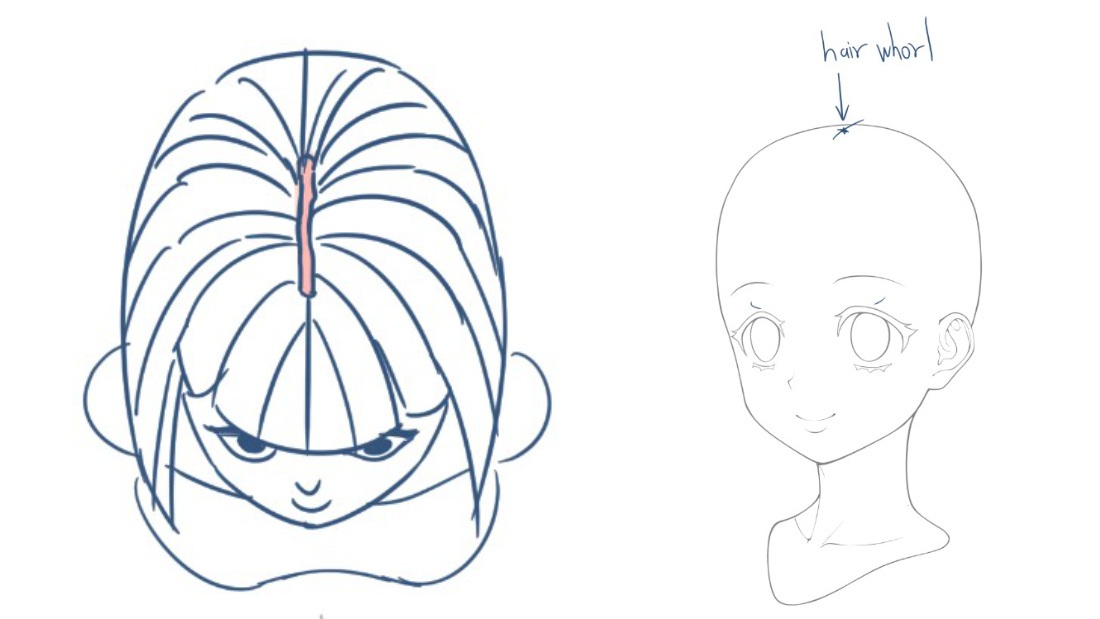
Everyone has a hair whorl, but its position can vary from person to person. In anime drawing, we usually simplify this by placing the hair whorl on the left, center, or right of the scalp.
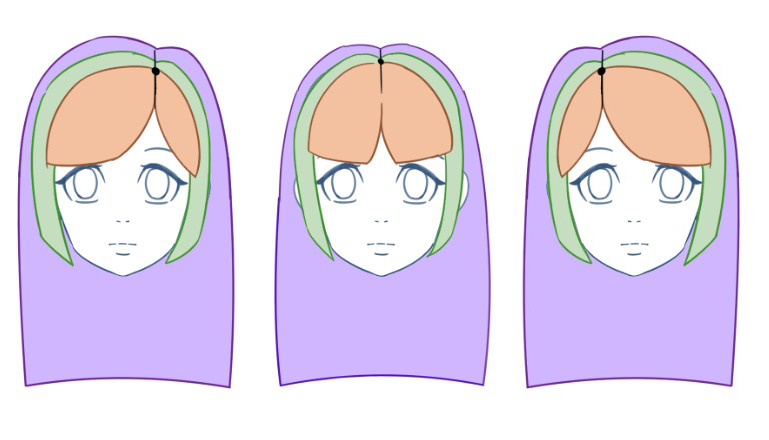
Lower the opacity of the head layer, then create a new layer on top to start drawing. In this example, let’s place the hair whorl at the middle, which is around the center of her head. Since the head is an oval, the mid point always stays in the middle at any angle. By marking the hair whorl first, it becomes much easier to design the flow of the hairstyle using hair chunks in the next step.
Step 3: Design the Flow of the Hairstyle Using Hair Chunks
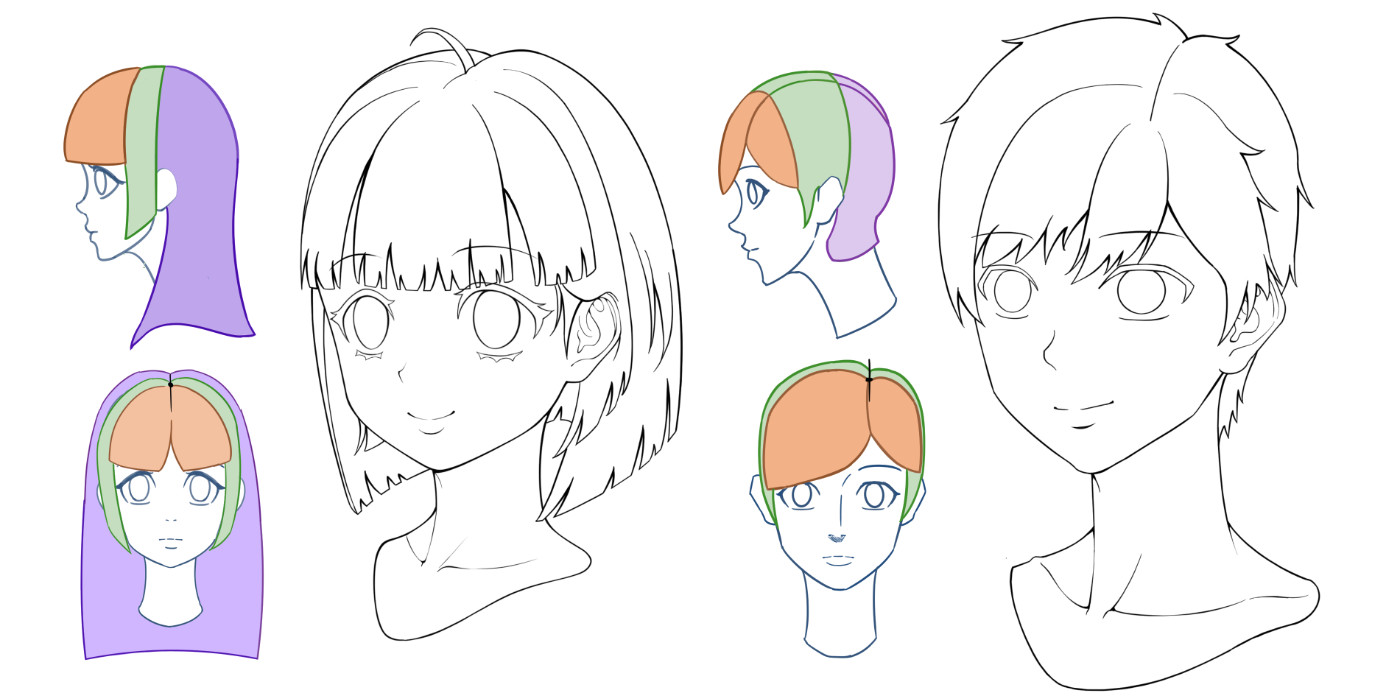
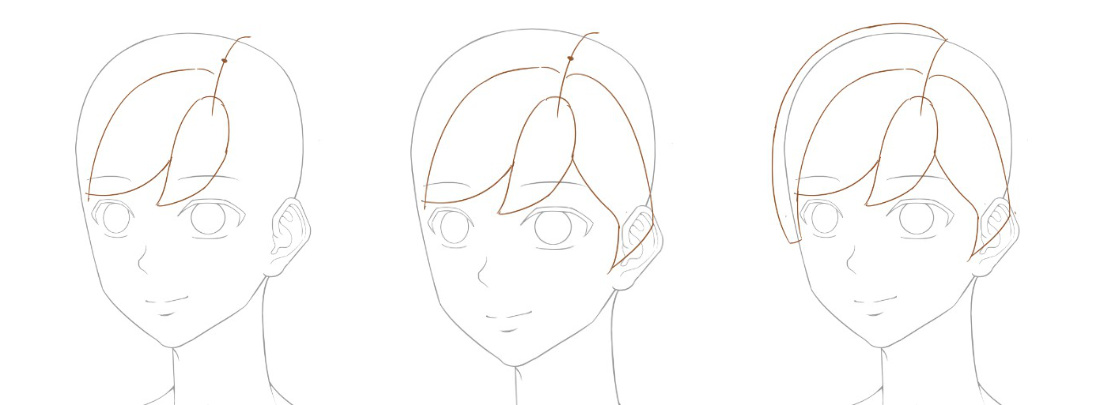
When designing hair chunks, think of the hairstyle as being divided into three main sections: the bangs (front), the sides, and the rear (back). This applies to both short and long hairstyles. Keeping these three sections in mind helps guide the direction of your hair chunks. It prevents you from drawing them randomly and gives the hairstyle a clearer flow and structure.
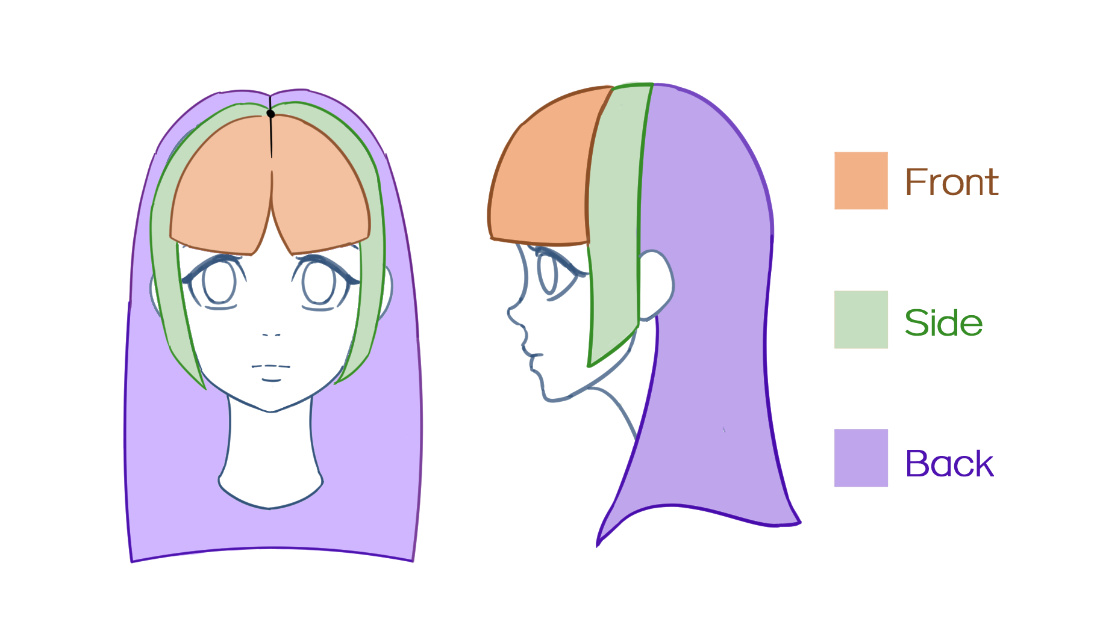
In this example, let’s draw a moderately short hairstyle for this anime girl. After marking the hair whorl, start by drawing the front section (bangs). Divide it into three hair chunks, with the middle chunk larger than the two on the sides.
Personally, I find it easier to start my lines at the hair whorl and extend them downward to form each hair chunk. You can try starting your lines from the hair whorl or maybe from the sides or bottom if that feels more comfortable for you. No matter where you begin your lines, remember that the hair whorl is the origin point of the hair. Because of this, the hair chunks should visually connect back toward the hair whorl.
Then, draw the side hair chunk. Make this chunk longer and slightly sharper, giving it a different shape design compared to the front chunks. You can also optionally add a small sideburn near the ear, which we will draw in this tutorial.
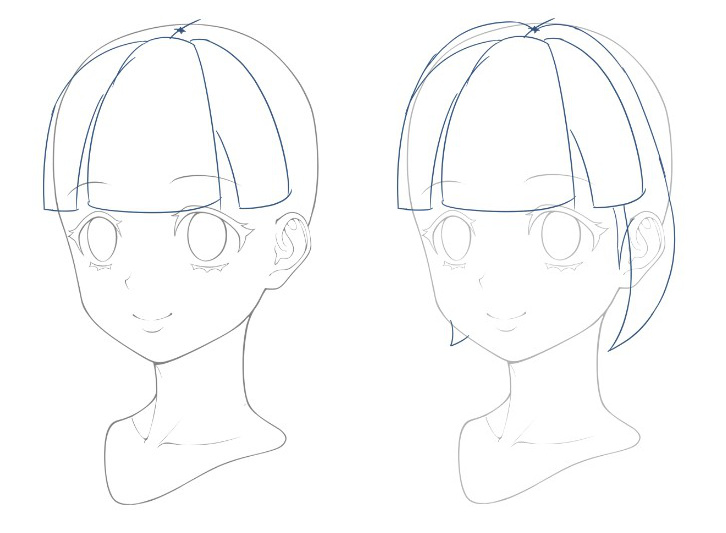
Lastly, draw the back hair chunk, which is the largest of all.
Hair Drawing Tip: Flow Direction
When designing hair chunks, you can also change the flow of the hair. Instead of having all the hair chunks fall straight downward around the scalp, you can adjust the direction of some chunks to create a more interesting design.
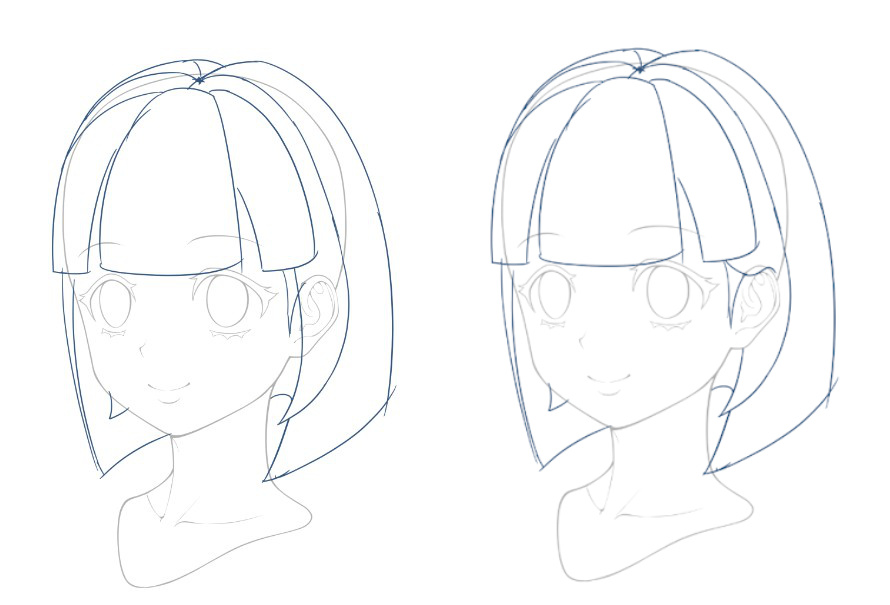
In this example, we can erase and make the side hair chunk flow backward toward the ear instead of covering it.
As you can see, we have constructed an interesting volumetric hair design without drawing a bunch of messy hair strand lines. Once you are satisfied with the overall hair chunk layout design, you can start turning the chunks into hair strands.
Step 4: Detailing each hair chunk into hairstrands
Common Beginner Mistake #3: Drawing Each Hair Strand the Same Pattern
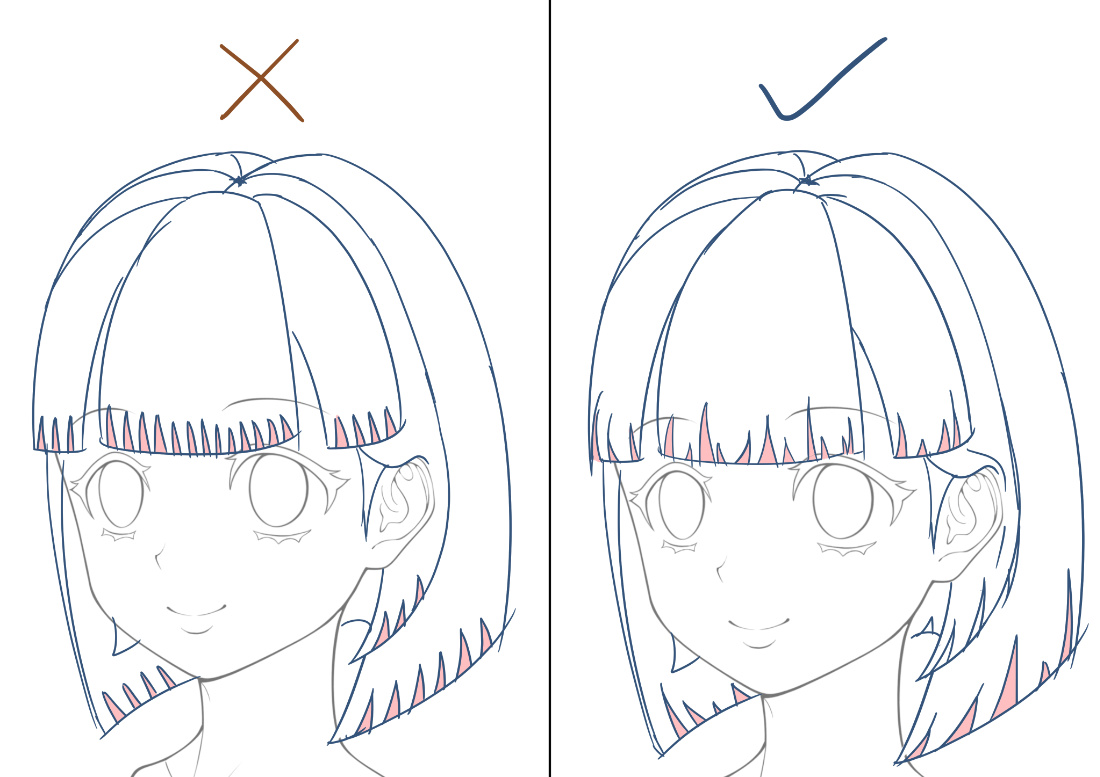
Beginners often draw each hair strand with similar width and length, which results in a stiff, unnatural hairstyle. To make the hairstyle look natural and interesting, make sure the strands vary in height and width – some taller, some shorter, some wider, and some narrower. A little repetition is fine, but avoid repeating the same size across the entire hairstyle. I personally like to think in terms of big, medium, and small when drawing each hair strand.

Another useful technique for drawing hair strands is to focus on the negative shapes, which are the small triangular gaps between strands (highlighted in light red below). Try to make the triangular gaps vary in shape and size in each hair chunk to keep the hairstyle natural and interesting.
Step 4b: Adding Unique Individual Strands (Optional)
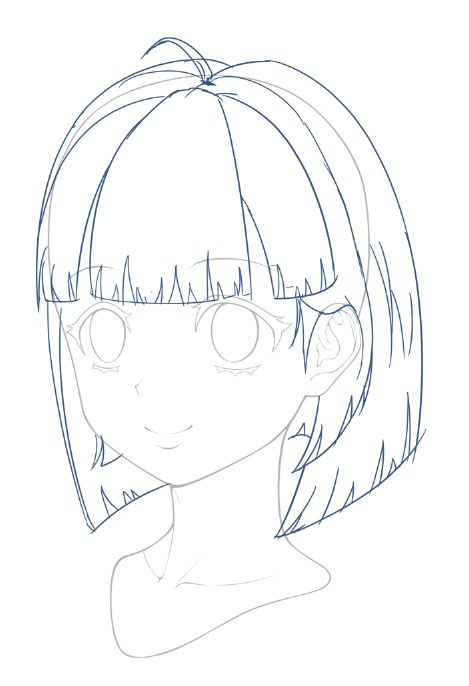
To make the character’s hairstyle more unique, you can add individual strands that stand out from the main hair flow. In this example, we can add a strand on top of the hair whorl flowing in a different direction, and two strands around the side hair.
Step 5: Clean Line Art
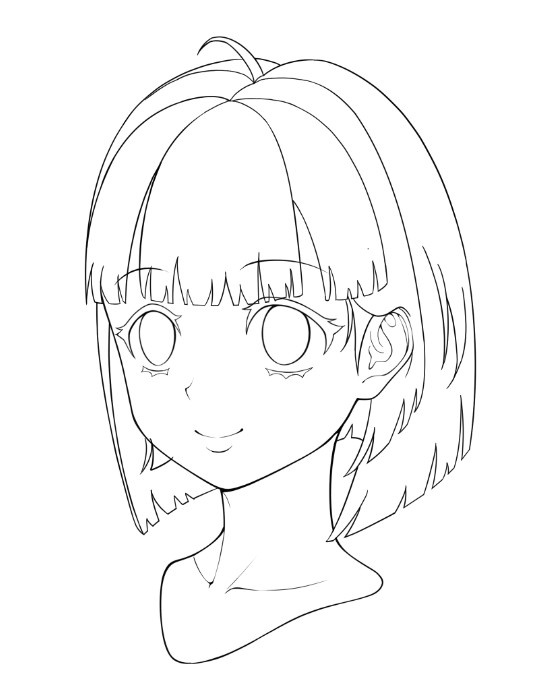
Once we are satisfied with everything, go back to the head layer and erase the scalp where the hair is covering it. Then lower the hair layer opacity and create a new layer on top to draw clean line art for the hair.
Hair Drawing Tip: Line Weight
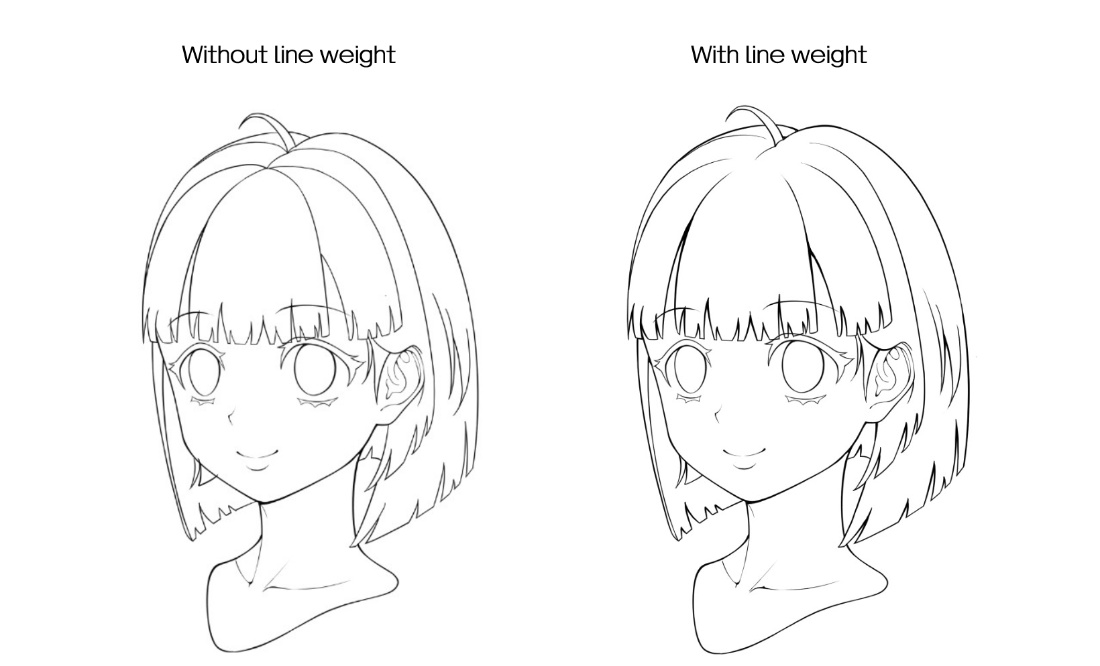
You can enrich the line weight by thickening the lines between hair gaps to create occlusion shadows. You can also use an eraser to gradually taper the lines as they approach the hair whorl. Leaving some blank space also helps the hair look more natural.
Hair Drawing Tip: Detailing
You can keep the hair clean as it is now, or add as many strand details as you want depending on your art style and preference. In general, if you do not plan to color, you can add more details, similar to a monochrome manga or comic style. However, if you intend to proceed to coloring, keep the line art clean for coloring, so you have more room to develop the details during the coloring stage.
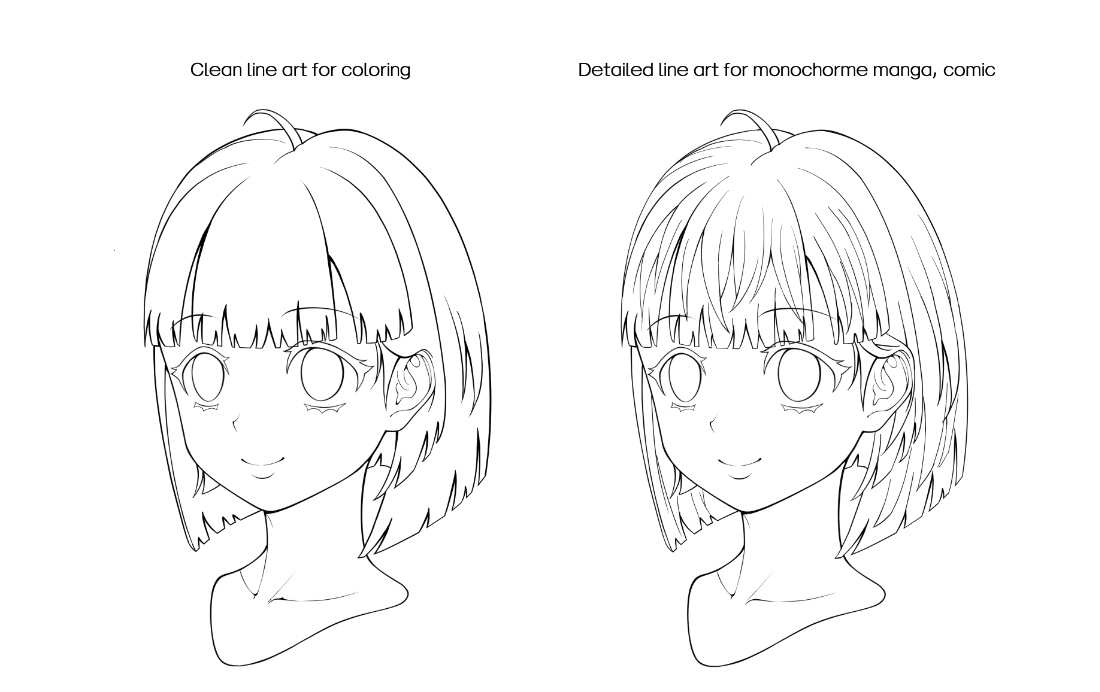
Now you should have a better idea of how to draw anime hair step by step!
Let’s go through another example – this time, an anime boy’s hairstyle. The method is exactly the same.
Step 1: Draw the Scalp
Make sure the scalp is drawn first before adding the hair.
Step 2: Mark the Hair Whorl
Just like with anime girls, the hair whorl can be placed on the left, center, or right side of the scalp. Lower the head layer opacity and create a new layer on top to start drawing the hair. This time, let’s place it on the character’s left side to create a right-swept hairstyle.
Step 3: Design the Flow of the Hairstyle Using Hair Chunks
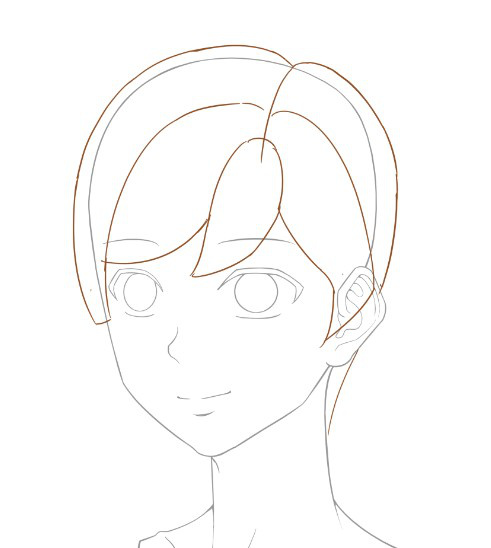
Boys in general have shorter hair, but just like girls, the hair can be split into three sections: bangs (front), side, and rear (back).
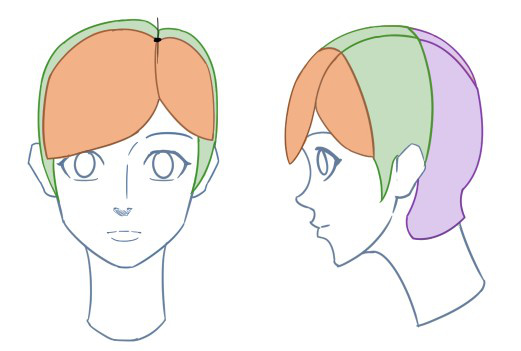
Start by drawing the front hair from the hair whorl. Draw one larger and one smaller chunk, both flowing toward his right side.
Anime Hair Drawing Tip: Flow Direction
You can always experiment with drawing hair chunks in different flow directions. In this case, I feel the front hair doesn’t always have to fall straight down – it can also be styled to the side. So here, we can draw the left front section flowing backward toward the left side, slightly covering part of the ear.
After that, we can design a longer hair chunk on his right side to help differentiate it from the other chunks. Lastly, we can draw the side and back sections as one connected chunk to complete the overall chunk design.
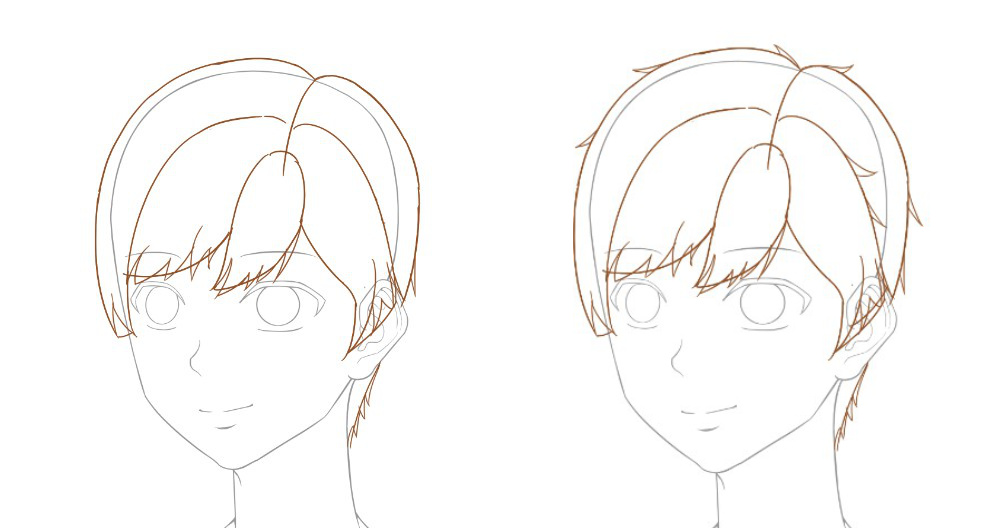
Step 4: Detailing each hair chunk into hair strands
Just like how we drew the girl’s hair earlier, start refining each hair chunk into strands. Try to vary the width and length of each strand to make the hair look more natural.
Step 4b: Adding Unique Individual Strands (Optional)
We can also add a few flipped-up strands, which are very common in male anime hairstyles. However, be careful not to add too many, unless you’re aiming for a spiky or messy hairstyle.
Step 5: Clean Line Art
Just like how we draw girls' hair, ease the scalp then draw a clean line art on a new layer.
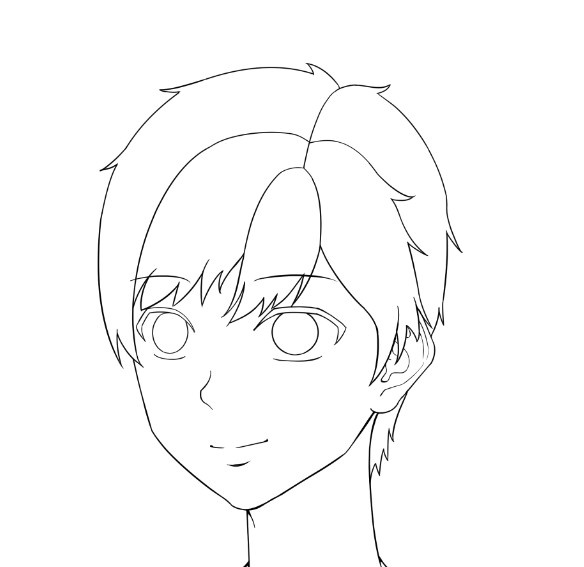
Anime Hair Drawing Tip: Line Weight
Enrich the lineweight by thickening the hair gap as occlusion shadow and taper the lines as they converge into the hair whorl.
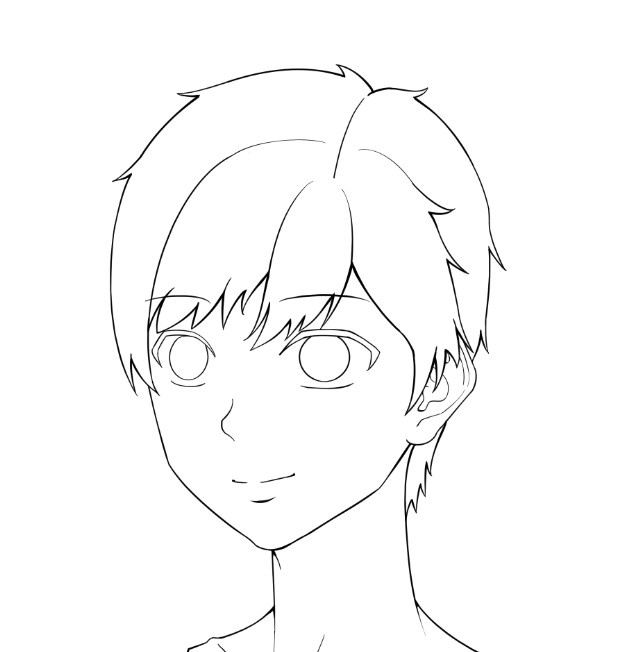
Anime Hair Drawing Tip: Detailing
Once your hair drawing looks solid in its simple form, you can decide whether to add more strand details to enhance it. If you plan to move on to coloring, keep the line art clean for more room to develop the details during the coloring stage.
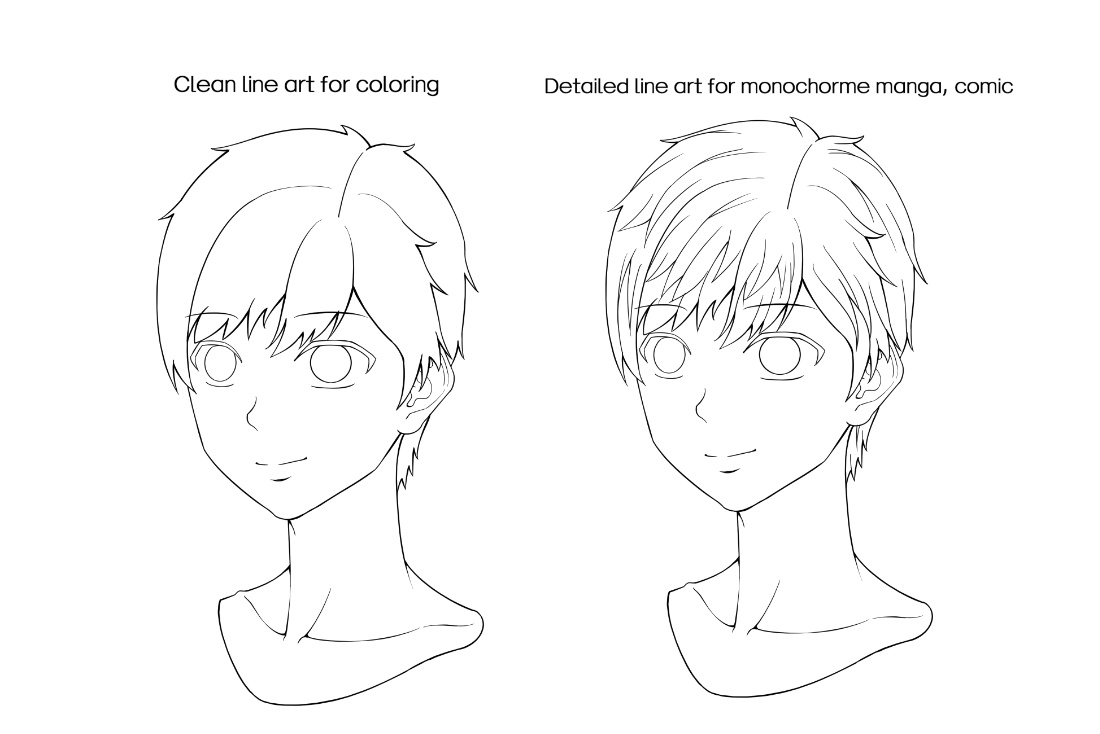
That’s a wrap! You’ve now learned how to draw anime hair step by step.
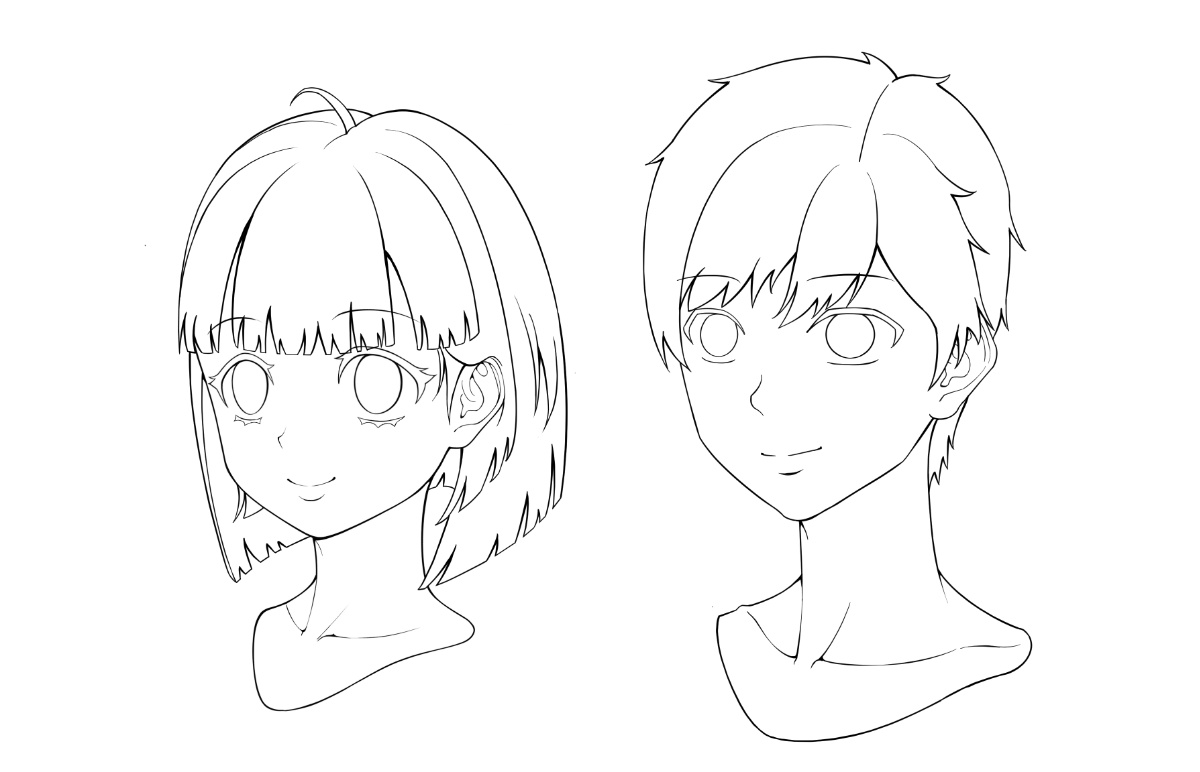
Want more tutorials? Check out my other ones at Clip Studio Tips. Keep practicing, have fun, and I’ll see you in the next one!
Want more drawing tutorials? Learn to draw with Wacom
Check out Wacom's Learn to Draw page for tons of tutorials for character design, anime & manga, and more digital drawing tips from the experts!