
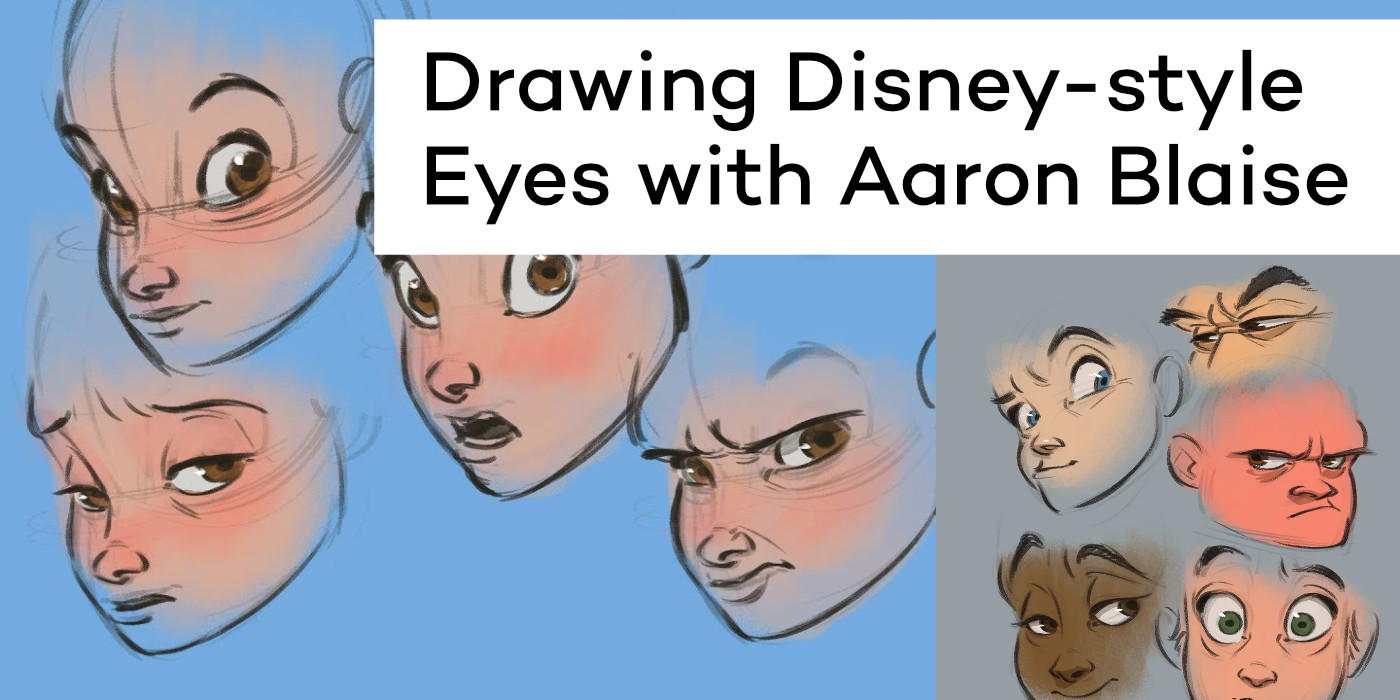
For 21 years, Aaron Blaise was an integral part of Walt Disney Feature Animation, contributing to classics like The Lion King, Aladdin and Beauty and the Beast. Now, through his platform Creature Art Teacher, he shares the invaluable lessons learned during his career. In a recent video, Blaise demystifies the art of drawing expressive Disney-style eyes, revealing that the magic lies not just in stylization, but in a deep understanding of underlying anatomy.
Many aspiring artists might think drawing cartoon eyes is simply about placing two circles on a head. However, Blaise quickly debunks this notion. "The biggest thing to think about when you're drawing those eyes," he explains, "is you don't want them to just sit on the surface of a sphere. You want to create a skull, you want to create a structure that those eyes can sit in."
This anatomical foundation is key. Even for highly caricatured Disney designs, the eyes need to feel like they are comfortably nestled within eye sockets, rather than merely pasted on. Blaise demonstrates this by first sketching a basic sphere, then building a more defined "caricatured skull" around it, complete with a centerline and an eye line that curves around the form. This structure, he asserts, is paramount.
Once the foundational structure is established, Blaise moves on to the exciting part: infusing eyes with emotion. He illustrates how subtle shifts in surrounding features dramatically alter expression:
- Angry Eyes: To achieve an angry look, Blaise brings the brow down, scrunching up the flesh above the eye. He also suggests bringing up the bottom of the eye slightly and emphasizing a heavier top eyelid line.
- Tired Eyes: For a tired expression, the corners of the mouth drop, and importantly, the eyelids come down. Blaise reminds us that eyelids aren't like shutters; they connect at the corners of the eye and conform to the eye's spherical shape. Adding subtle bags under the eyes further enhances the sleepy look.
- Surprised Eyes: To convey surprise, the mouth opens, and the eyes widen dramatically. The irises are placed centrally, surrounded by white, and the pupils are often made smaller. Crucially, the eyebrows are raised significantly, pulling the surrounding flesh upward.
"The big key here," Blaise concludes, "is making sure that you're thinking about the anatomy ... all the different parts around the eyes – the flesh, the bridge of the nose – all these parts that are going to help with expression." By focusing on structure and understanding how all facial elements work in harmony, artists can unlock the secret to drawing truly captivating and emotive Disney-style eyes.
Want to dive deeper into character design, animation, and storytelling? Visit Aaron Blaise's website at Creature Art Teacher for over 800 hours of invaluable instruction.

About the artist
Aaron Blaise spent 21 years at Walt Disney Feature Animation, helping to create some of the greatest animated films ever made. During that time he worked as an animator or supervising animator on “Beauty and the Beast," “Aladdin,” “The Lion King,” “Pocahontas,” and “Mulan.” In 2003 co-directed of “Brother Bear,” for which he earned an Oscar nomination.
After “Brother Bear,” he helped to develop several projects but ultimately left Disney to pursue other projects. He recently developed a short animated film called “Snow Bear.”
He publishes tons of video content and livestreams on his YouTube channel, and you can follow him on social media on X (Twitter), Instagram, or Facebook. He also has countless art tutorials and lessons on his website, Creature Art Teacher.

Want more drawing tutorials? Learn to draw with Wacom
Check out Wacom's Learn to Draw page for tons of tutorials for character design, anime & manga, and more digital drawing tips from the experts!