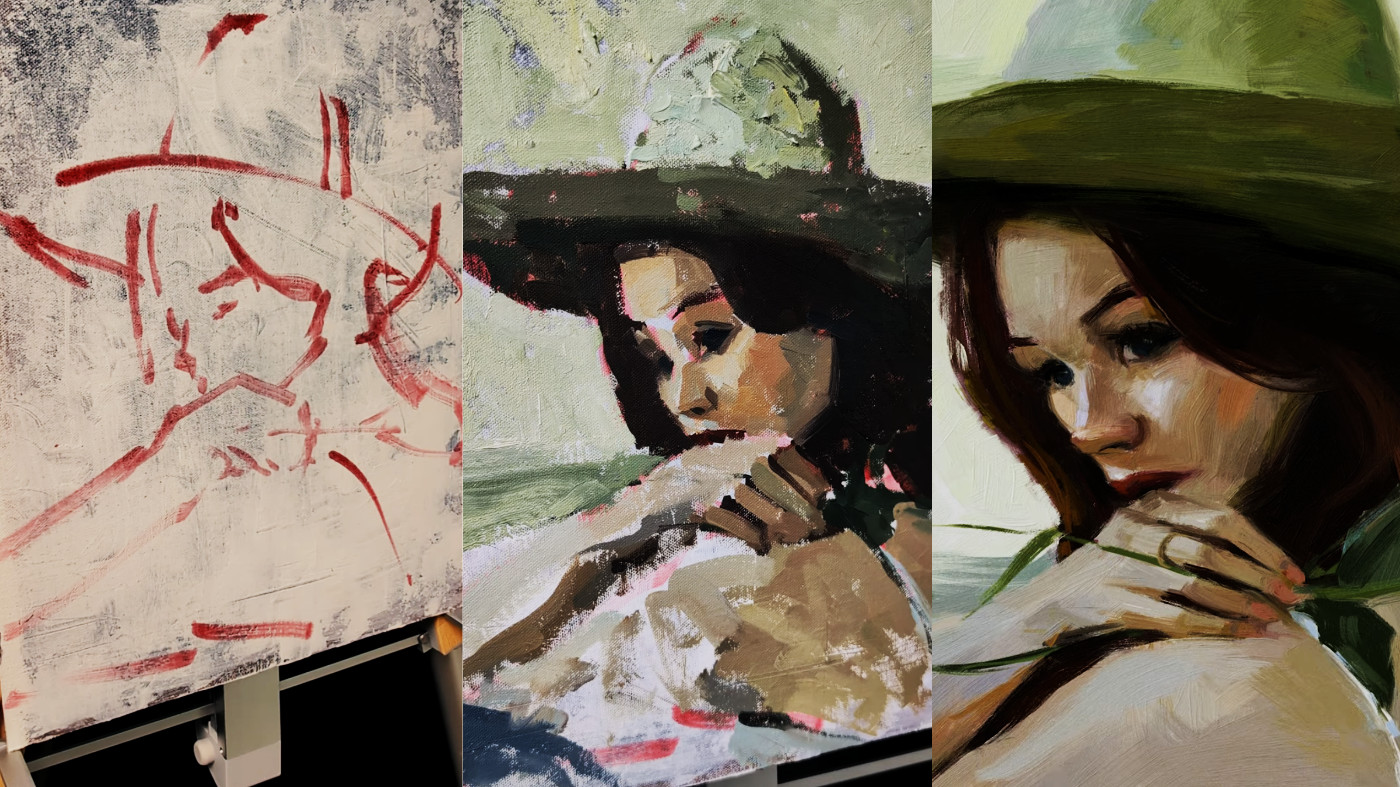
Many artists who are really good at digital painting have a background in traditional artwork. Digital offers a number of benefits to any artist. Chief among them is the ability to “undo” an errant stroke. But it also a few drawbacks; sometimes not being able to undo a “happy accident” can lead to an unexpected breakthrough, or at the very least can help you grow your skills.
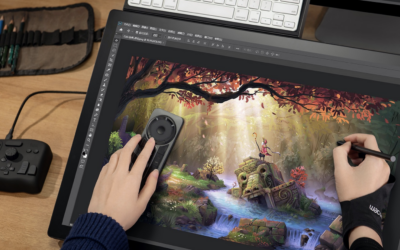
Daniel Ibanez is an expert digital painter who uses Rebelle software, the premier software for digital artists looking to create work that mimics traditional painting as closely as possible. It’s unique engine recreates the intricacies of paint on canvas, and paint interacting with other paint – wetness, dripping, blending, and the like. It’s calibrated for Wacom creative tablet technology; especially with Wacom Pro Pen 3 you can get the most precise digital input possible, getting as close to the true look and feel of traditional painting possible on a digital device.
Daniel wanted to put this to the test with the latest Wacom Cintiq pen display and the latest Rebelle 8 software: what if he painted the same portrait traditionally, in oil paints on a canvas, and then digitally, in Rebelle on his Cintiq? How would the process differ, and how would the final outcomes compare? He put together a three-part video series to explore exactly this question. Those videos are below!
“My first love in painting is oils,” Daniel says. “There’s just something about the way that paint slips across the canvas. And ever since I started digital painting, I’ve always wanted to find a way to bring that experience to my digital canvas … I’ve finally been able to reproduce in the digital through the use of a Wacom Cintiq and Rebelle 8 Pro.”
So he devised a challenge: painting the same portrait both traditionally and digitally, and see how they compare! He starts with the oils, gets some basic ideas down on the canvas, then goes to digital to get started there, and he goes back and forth.
In the second video, he continues to go back and forth between the traditional and digital canvas, moving from line work to value. “I’m astonished that I can recreate the process exactly,” he says. “I even feel like I have even more control with the digital than I do with the oils. And that’s remarkable, because it’s such a challenge to replicate that whole physical experience on a screen and with a pen, but … with Wacom Cintiq and Rebelle Pro, I’m able to bring the brush strokes to life in the same manner that I do here with oils.”
In the final video in the series, he finishes up the experiment and reflects on the process. “I’ve been painting my whole life since I was a little boy,” he says. “And throughout that journey, I’ve painted in every style and every medium. And I’ve tried all the things. And the older I get, while I still love experimentation, and while I still try all kinds of random things in my studio, the older I get, the more I want to go back to what I truly love … and for that, I’m incredibly grateful for this process and for this technology setup, which allows me to paint in digital in exactly the same way that I paint traditionally.”
He praises the build quality of the Wacom Cintiq, as well as its color accuracy, and lauds the precision of the Pro Pen 3. His overall take? “The synergy between Rebelle and Wacom made this whole process so incredibly fun.”

About the artist
Daniel Ibanez is a fine artist and illustrator who works both traditionally and digitally. His digital technique has been heavily informed by his approach to traditional painting. Light, both literal and symbolic, is the core driver of his work and his favorite subject matter. Follow his work at his website, on Instagram or YouTube, or take a digital portrait class from him via Domestika.