
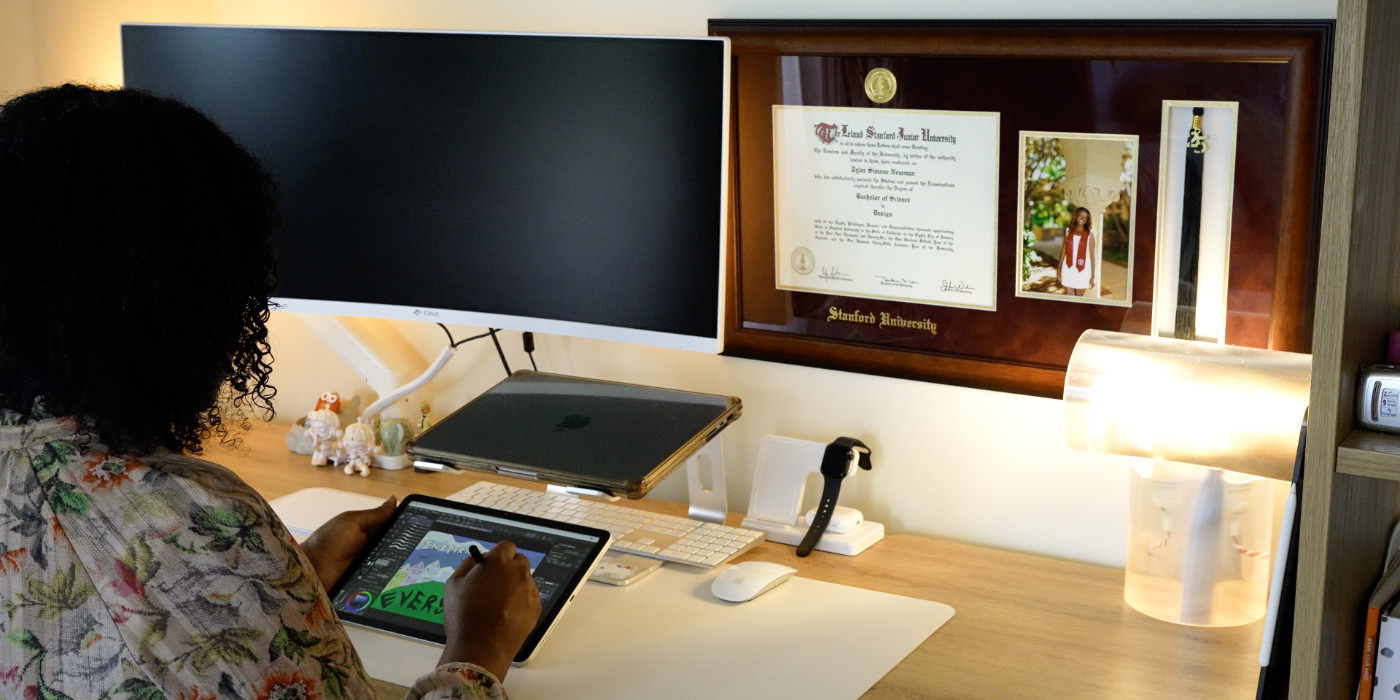
This is a guest post written by Tyler Newman. Visit her on Instagram or read to the bottom of this post to learn more about her.
For years, design school gives you a structure for becoming. There are briefs, critiques, studio walls, deadlines, and people beside you who understand why you spent three hours adjusting the spacing between two words. Then you graduate.
The assignments disappear. The community disperses. The title that once explained you – "design student" – no longer applies. Suddenly, the most difficult project in front of you is not a product, campaign, or prototype. It is yourself.
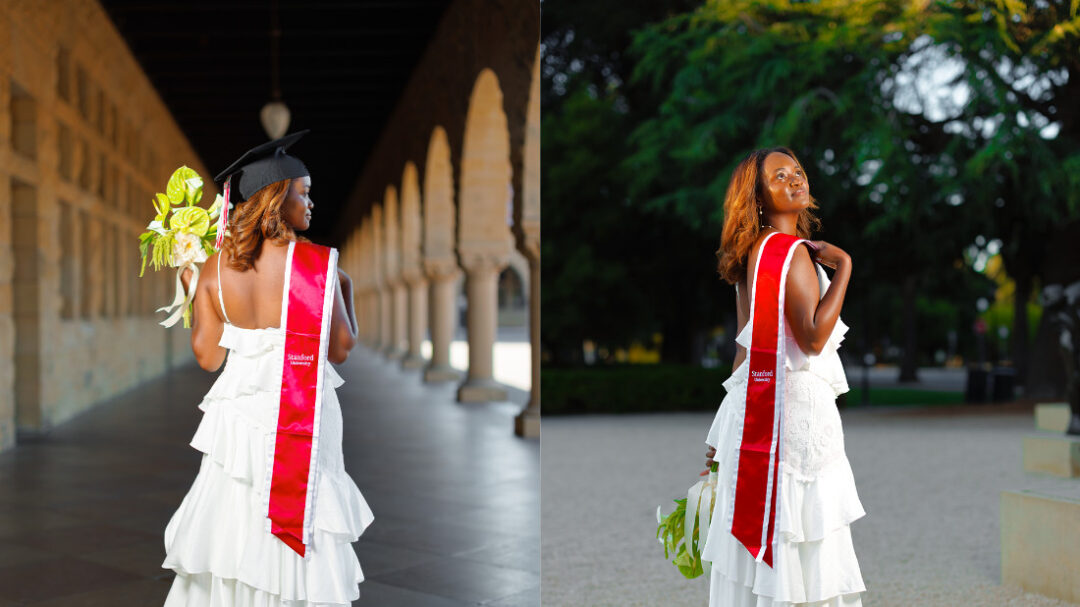
I graduated from Stanford with a degree in design in 2025. Almost overnight, I went from working in the design school alongside a cohort of student designers – covering walls in Post-it notes, building prototypes, and exchanging ideas – to creating alone in my apartment.
In school, creativity had been communal. After graduation, it became private. There was no critique scheduled for Thursday, no professor asking what I was trying to say, and no classmate across the table pushing an idea further. I had to build a creative life without the structure that had once sustained it.
Many new graduates are entering the profession at a similarly uncertain moment. Artificial intelligence is reshaping how creative work is produced and valued. Companies are shrinking teams and asking fewer people to do more. Young designers are told to specialize, build a personal brand, master new tools, and remain adaptable, often before they have had enough time to discover what kind of work they want to make. I have learned that the answer, for me, is not to become smaller – but to build a creative life with intention.
Building a Creative Life Alongside Others
After graduation, I began inviting friends to my apartment on Sundays. We brought sketchbooks, laptops and unfinished ideas. We drew, edited videos, talked through projects and gave one another feedback.
What began as a casual gathering eventually became Room to Make, a creative community that expanded beyond my apartment and into a tea house in San Francisco. Friends invited friends. The group chat grew. The need, I realized, had never been mine alone.
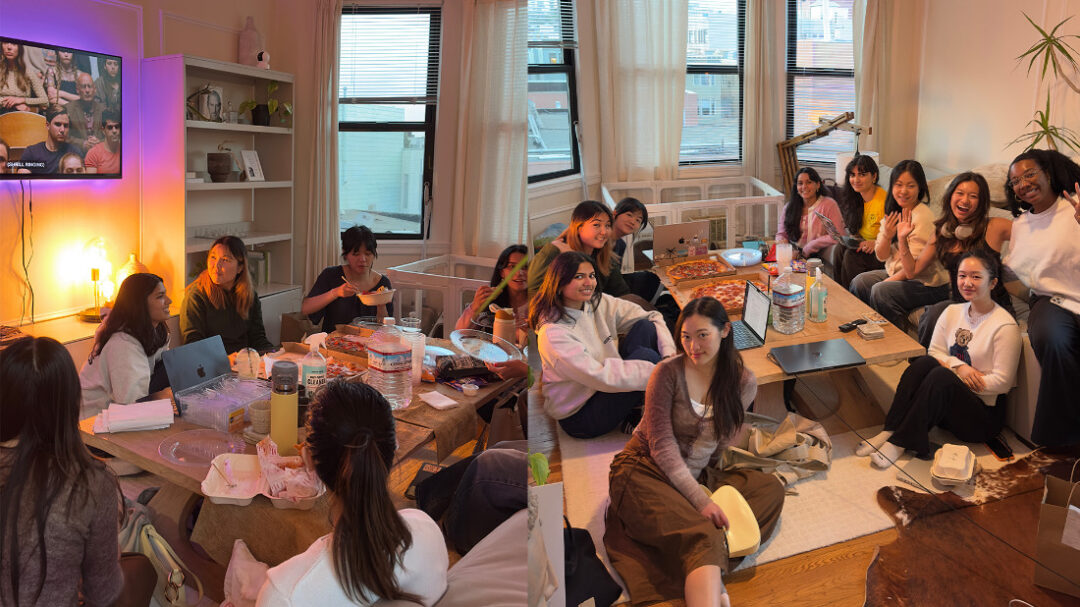
Creativity does not always thrive in isolation. Sometimes it needs accountability, encouragement and another person across the table saying, “Keep going.” One of the most useful things a young designer can do is create the environment they wish existed. Chances are, other people are searching for it too.
Making Your Unique Perspective Your Strength
I have always loved both design and writing. As a child, I made comic strips because I wanted to tell stories through words and images at the same time. In college, however, I was often encouraged to narrow my focus. I was told that I would eventually need to choose.
Then, one of my earliest professional opportunities came from a recruiter who was interested in me precisely because I had experience in both writing and design. The qualities that make your career difficult to summarize may also make it memorable. You may be a designer who writes, a strategist who illustrates, or a researcher who makes films. These combinations are not distractions from your professional story; they are the story.
The goal is not to force every interest into a single title, it is to understand the thread connecting them: the questions you return to, the problems you care about, and the perspective only you can bring. Your twenties do not have to be a branding exercise during which you select one permanent identity. They can be a time to experiment, expand your skills, and discover where your interests intersect.

Build Relationships That Grow With You
A strong portfolio matters. But in a competitive job market, a portfolio alone may not be enough.
Many opportunities emerge through relationships: a former colleague who remembers your work, a conversation that leads to an introduction, or a person who thinks of you when a role opens. This does not mean collecting contacts or treating every interaction as a transaction. It means becoming genuinely curious about how other people built their careers, and allowing them to become familiar with your own.
I keep notes from professional conversations in a notebook and spreadsheet: what someone shared, what advice they offered and where we left off. This helps me follow up thoughtfully and maintain relationships over time. Your network should not be a list of people you ask for favors. It should be a community of people whose work you respect, whose paths you learn from, and with whom you remain in meaningful contact.
The future of design may be uncertain, but new graduates are not powerless within it. We can build communities, make our range an advantage, and create careers from the intersections of our interests.
The first real design brief of your career is not your portfolio. It is deciding who you will become when no institution, title or job description gets to decide for you.
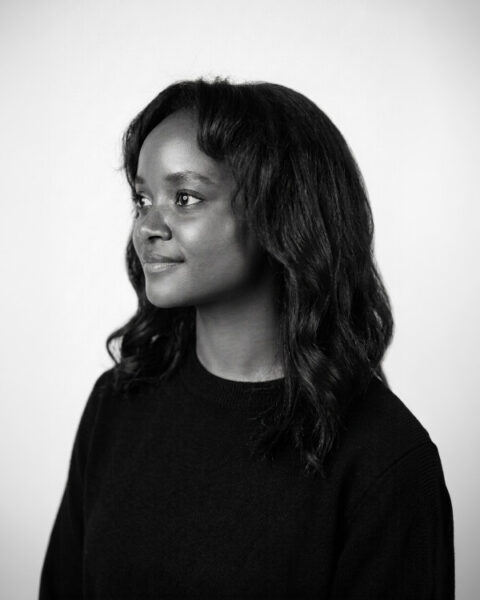
About the author
Tyler Newman is a multi-hyphenate creative specializing in design, copywriting, social media, and PR.
She graduated from Stanford University in 2025 with a B.S. in Design and minors in Creative Writing and Mandarin Chinese. She is currently a Junior Designer on Apple’s Marcom Design Identity team, where she helps develop art direction and create graphic and motion design assets for unreleased products.