

A lot of young creatives think that there's a standard artist career path: draw as much as you can as a young person, take art classes in high school, go to art school for college, and then either join a studio or attempt to make it on your own as a freelancer. But that's just one of countless ways to live a creative life and maybe even make a career out of art. Not many know that there are hundreds of other creative careers out there that allow someone to combine a passion for art with their other interests: biology, for example, or animals, or criminal justice.
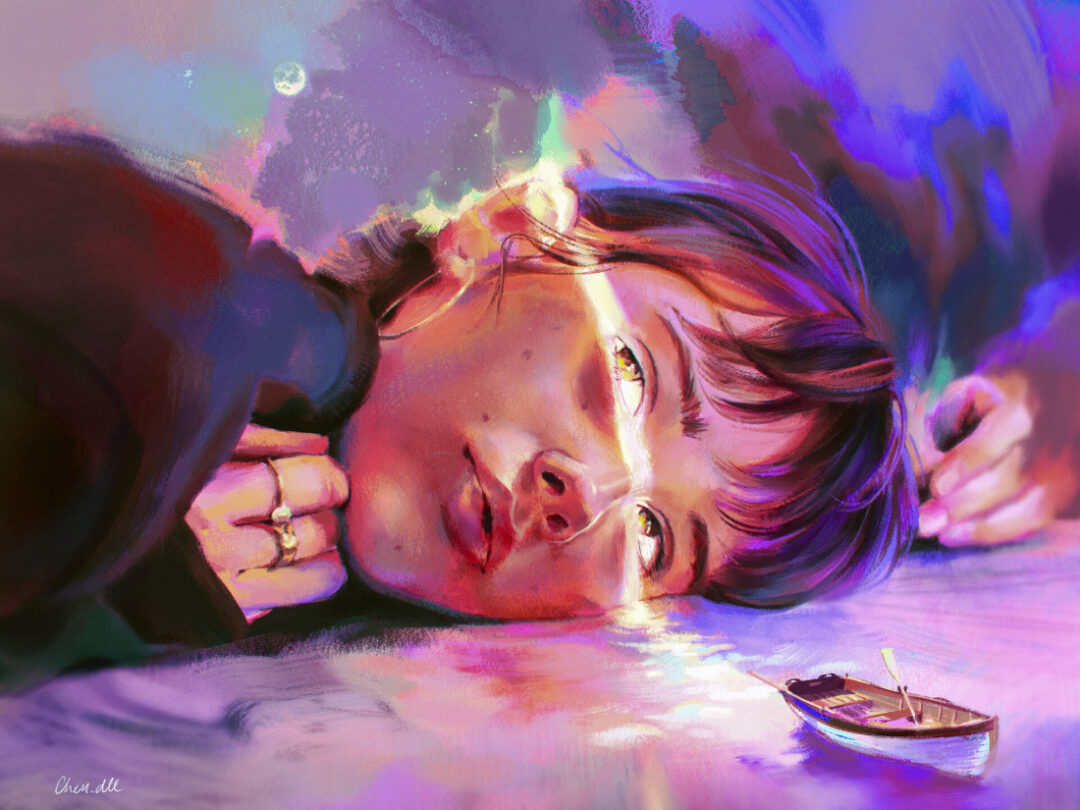
For Yi Chen Hock, known online as chen_dll, it was engineering and electronics – she never even considered going to art school! It's hard to believe given the technical expertise in her dynamic illustrations, with their muted holographic color palettes and depth of emotion, but Hock got a degree in engineering and now works as a "technical artist" at tech giant Meta – a career that doesn't really involve illustration at all.
We spoke with Hock about her background and creative journey, what a "technical artist" even is, how she developed her unique aesthetic, why humor is so important to her work, and what she thinks about the new Wacom MovinkPad 11, which she took on a recent trip to Japan. Note: the interview below has been edited slightly for length and clarity.
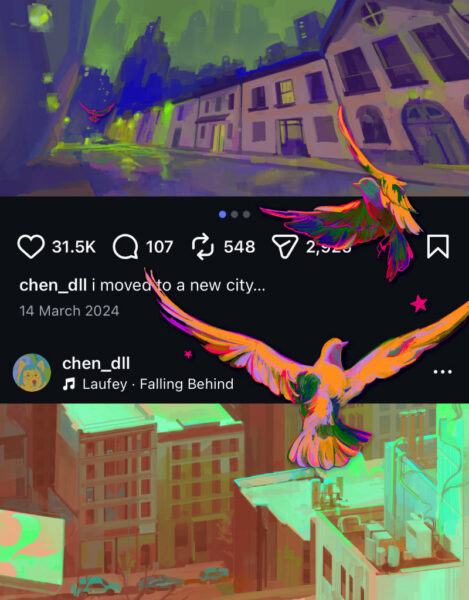
As a young person, did you think art would be your career? You ended up pursuing an engineering degree, rather than going to art school, for example – but now seem to have combined your interests in your current position as a technical artist. How did you arrive where you are now?
From an early age, I discovered that I had an affinity for art, and a strong desire to improve my art skills independently. It was a pretty lonely journey, since I did not have many artist friends who shared a similar passion until I moved to New York for my current tech art job in March 2024.
I’ve actually never considered a career as an artist, or even thought about going to art school. This is partially because I wasn’t surrounded by any artist friends, and I was often told that pursuing art typically led to lesser career prospects. As I also developed an interest in electronics and indie game development, I naturally gravitated towards pursuing an engineering degree.
Keeping up with my art progress while studying engineering felt like I was constantly moving between two completely different worlds. But the key thing that I felt also related the two disciplines was that they both had strong roots in design, and I realised that I could also be creative in the engineering field. In my final year I was able to design my own Master’s thesis project to be more art-oriented: I built a machine-learning-based gesture-controlled VR drawing system.
I didn’t know that technical art was a career path until I discovered the job title one day during my Meta software engineering internship in 2022. It immediately piqued my interest, and I set up several meetings with technical artists in the company to learn more about what it was about. I was then noticed by a tech art manager, who later referred me for my current technical artist role at Meta. My VR thesis project, passion for art, and most importantly my proactiveness in reaching out helped me to land this role.
What exactly is a technical artist? What kind of person might want to pursue this kind of career?
A common misconception that I often get with my job title as a “technical artist” is that people assume I draw for work, especially since I make a lot of illustrations. But all my drawings are actually personal work, and my day-to-day job is much closer to software engineering or game development!
A technical artist is a hybrid role between art and engineering, and often we bridge artists and technology by making tools for artists or building pipelines needed to get their work into production. The exact responsibilities of a technical artist can vary by project and may be specialized, for example in pipeline work – which is what I mainly do – rigging and animation, or shader development.
I was drawn to technical art because I wanted to be able to work in a field closer to art than just doing traditional software engineering, and I think someone who’s both technically-minded and likes to work closely with artists would enjoy this role, too.
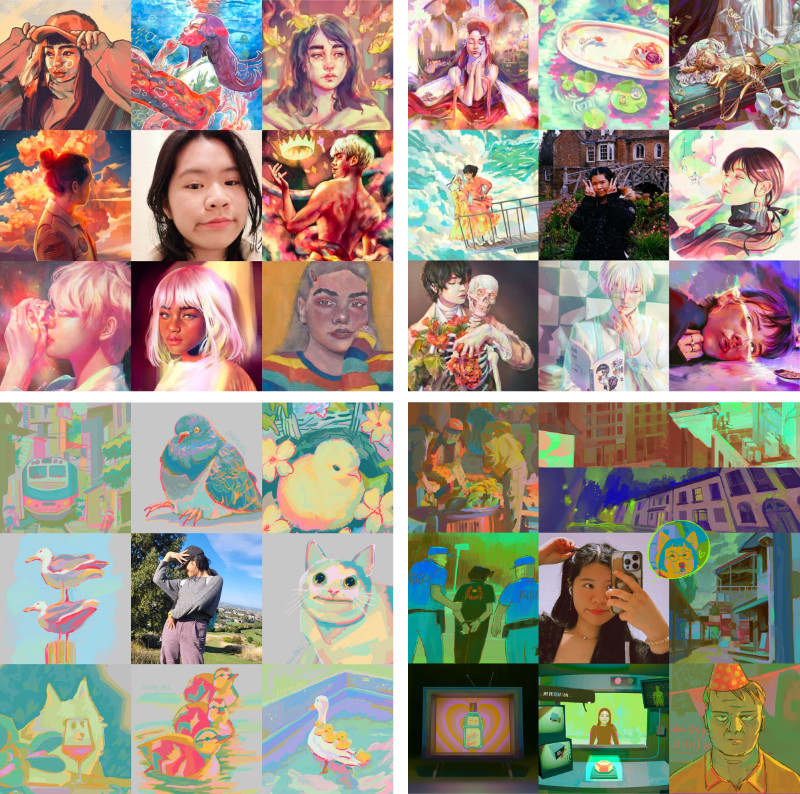
Your personal artwork has a unique color palette and aesthetic that’s difficult to describe – your use of muted neons and metallic colors creates a dreamlike, almost holographic quality. How did you come to develop your particular style?
Thank you! I’m a huge fan of iridescent and holographic colors, so it makes me happy to hear that I am able to convey that quality through my artwork. Thinking about how I can push colors more in my artwork and exploring new color palettes is always at the top of my mind when I’m drawing. I’m super inspired by artists like rei_17, namendart and Slawek Fedorczuk, who have very unique and “unconventional” color choices in their work, and I wanted to also develop my own distinct approach to color that’s uniquely mine and instantly recognizable.
The journey to get there has been a slow evolution over time of countless explorations, mainly driven by me identifying “gaps” in my artwork. When my art used to be higher contrast and used more orange, I pushed myself to use softer, more pastel colors. Then when I felt like I had lost touch with understanding how to use darker colors, I challenged myself to bring contrast back into my artwork while keeping that prismatic quality that I had discovered in my pastel artworks.
After I completed a short art mentorship with Slawek in early 2024, I developed the darker, more neon colors I use in my most recent works.
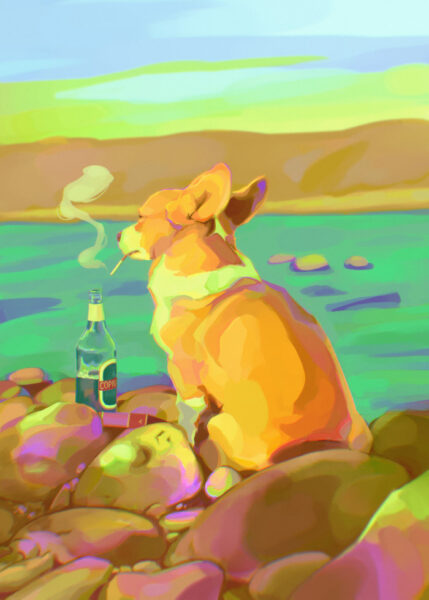
Another clear feature of your personal work, the art products you make, and your social media presence is an irreverent sense of humor, whether you’re surreptitiously editing another artist’s work to look like handsome Squidward, designing t-shirts about how to throw a fish, or pretending to keep your Wacom MovinkPad 11 in the fridge. Why is humor important to your practice? How do you balance taking your art “seriously” and keeping things fun?
Beyond just making art, there’s also art in its presentation, especially for social media. I believe combining humor and art makes my work more engaging, and it’s also my way of injecting more personality into my work. It’s super important for me to have fun while making art, and making things that other people enjoy and find funny makes me very happy!
What does it mean to keep art “serious?" I think this would depend on the artist’s goals. A friend of mine who works in the industry as an artist treats her Instagram more like a portfolio, and said that she'd be hesitant to post the kind of content I enjoy making – like my Squidward art. I wouldn’t know how much my more “unserious” work may be deemed unprofessional in that realm, but that also doesn’t matter to me anyway, because I don’t intend to use my art to pursue an industry art job anytime soon. I’m more interested in paving a path as an independent artist so I can do it however I want, and also have fun with it!
You recently took the Wacom MovinkPad 11 on a trip. How was the experience?
I took my Wacom MovinkPad 11 all-in-one drawing pad with me while I was in Hokkaido recently, and drew along the way. It's super lightweight and portable, and it's pretty slim so it fits in my bag easily. I tried the built-in Wacom Canvas app, and it was convenient for sketching on-the-go. I did some sketches on the bus on the way to the ski resort. Later in the evening, I made a more colorful illustration in an izakaya in Otaru.
I really like the feel of the tablet; it's the same feel as drawing on a small version of the Wacom Cintiq – but totally standalone. The MovinkPad case lets me prop up the tablet to a comfortable viewing angle, although it only has one angle. The battery life was really good; I only charged it once the day before and it lasted me through the two-hour evening drawing session with plenty of charge to spare. Also, the three buttons on the pen allow me to color-pick and pan my drawing, and the extra nibs stored inside the end of the pen are convenient! The pen is battery-free and has a super slim form factor, which I like a lot and prefer for portability.
I would recommend this tablet for travel – it's definitely designed for drawing-first, and since it's an Android tablet you can also install other useful apps that you may need on it as well!
Outside of your primary job, you do a lot of other things – illustration, apparel design, crochet, animation, game design, and more. Do you have one thing that you consider to be your primary artistic discipline, and why? How do you balance so many different interests?
I’d say my primary art discipline is still illustration, but fundamentally I just enjoy the process of being creative, no matter the medium. I love the process of learning new things! Most of my projects force me to pick up something that I haven’t done before, adding to the arsenal of skills I can draw from in future projects.
For me, it’s not necessarily about finding a balance of interests, as I feel like I don’t keep up with any single one super regularly – I'm OK with being a "jack of all trades, master of none," perhaps? I’d like to eventually shift towards bigger-scoped mixed-media projects, where I can indulge in more of what I love beyond just illustration, and have that become an integral part of my identity as an artist.
Do you have any advice for young or beginning artists who are trying to figure out their path – whether to go to school or for what major, balancing different interests, developing as an artist, etc.?
A while back, I had the opportunity to chat with Goro Fujita, a very accomplished art director. Something he said while sharing his own journey stuck with me: "It's always easy to connect the dots backwards, but not forwards."
In my case, I pursued art because I enjoyed it; I learned game development because I thought it was cool, all without a clear idea of what I’d do with any of it. I didn’t know what options could come up for me in the future. It can feel uncertain, maybe even directionless, if you think too hard about "What am I doing this for?" But I think you should just keep doing things for yourself if you like it. You never know when a future opportunity might require that random skill you picked up years ago – and if the stars align, it could turn into something you really love!
Got anything cool on the horizon that you’d like to share?
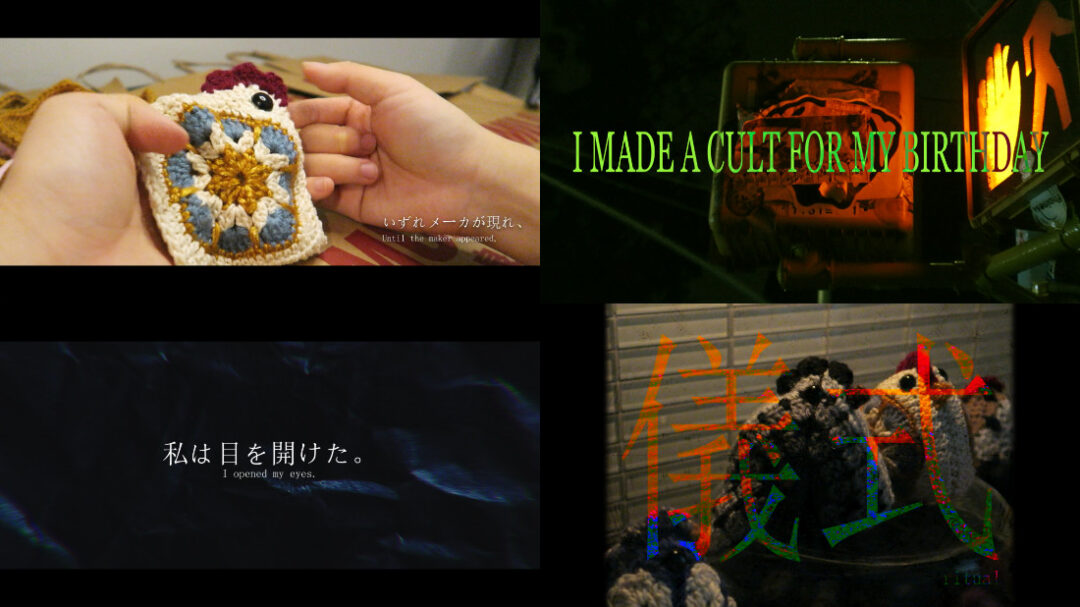
I’ve been getting more into cinematography recently! And embarking on increasingly ambitious projects ... Last year, I crocheted 22 chickens for all my friends and gave them away at my 25th birthday party. I put them all in “blind boxes” and got my friends to guess whose chicken belonged to whom in a fun social activity that I designed. I’m in the midst of turning it into a high-effort YouTube video, but that may still be in the works for a while yet, depending on what other side-quests come up for me. Beyond that, I aspire to make more short games this year, work on more story-based projects, and make more funny videos!
About the artist
Yi Chen Hock is an artist who is known for her colorful and vibrant illustrations. She currently works as a technical artist at Meta, and in her spare time she also likes game development, crocheting, and making funny videos.
Follow her work on Instagram, YouTube, Tik Tok, Bluesky, ArtStation, or LinkedIn.