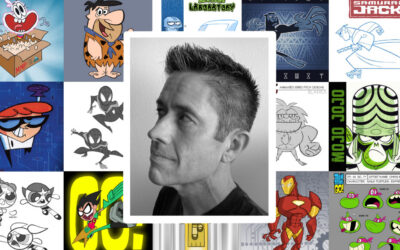

Here at Wacom, we're always excited to get to showcase innovators who use our products for new and emerging creative endeavors. One of those innovators is Dr. Alex Box.
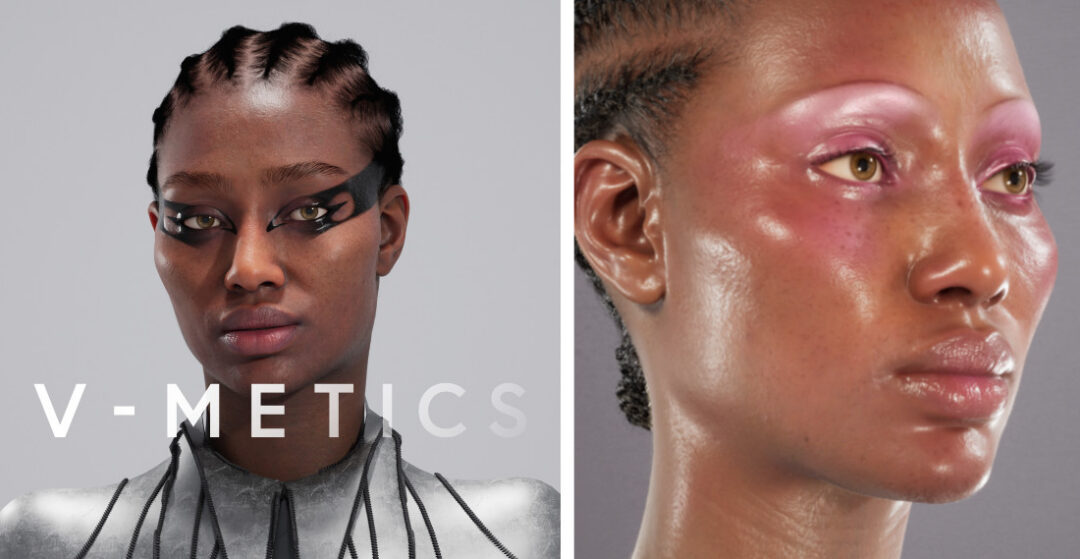
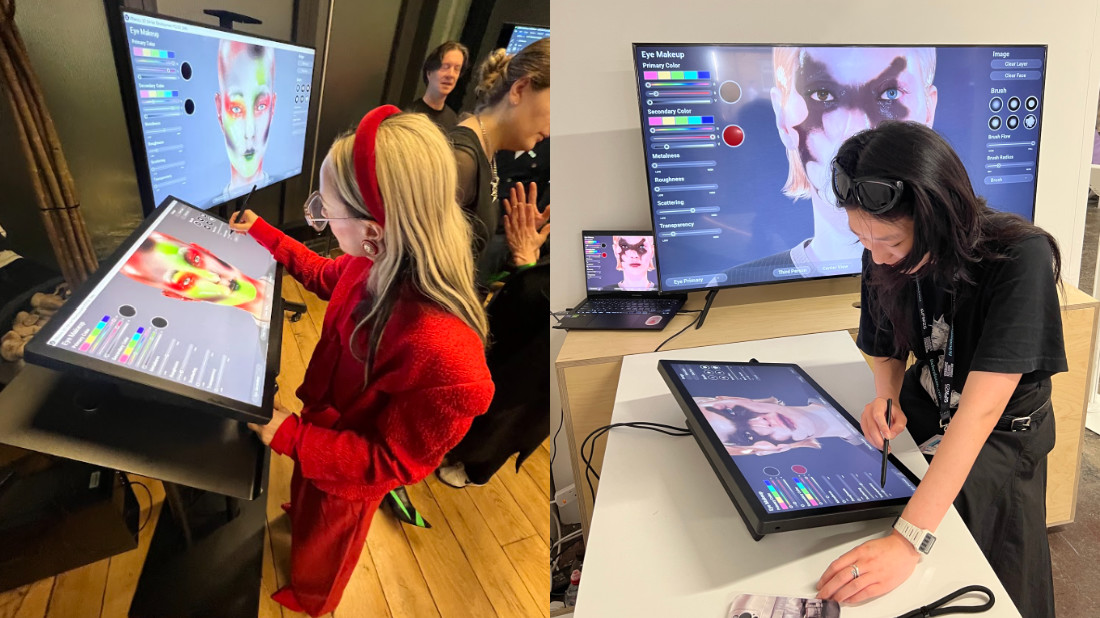
A pioneer in merging the physical and the digital – which she often refers to as "phygital" – she's making major waves in the beauty and tech industries with V-METICS, "an intuitive virtual cosmetics software that brings real artistry to the digital sphere for the first time."
Who is Alex Box? What is V-METICS?
Dr. Alex Box is an artist and beauty industry legend. She headed up Creative Direction for "anti-conformist" beauty brand Illamasqua, has collaborated with Alexander McQueen, Frank Ocean, Lady Gaga, and many more, worked with Chanel, Esteé Lauder, and NARS, as well as tech companies like Epic Games and Microsoft, joined the British Beauty Council in 2023, and was recently named one of Vogue Business' 100 Innovators for 2025 as a Beauty Disruptor.
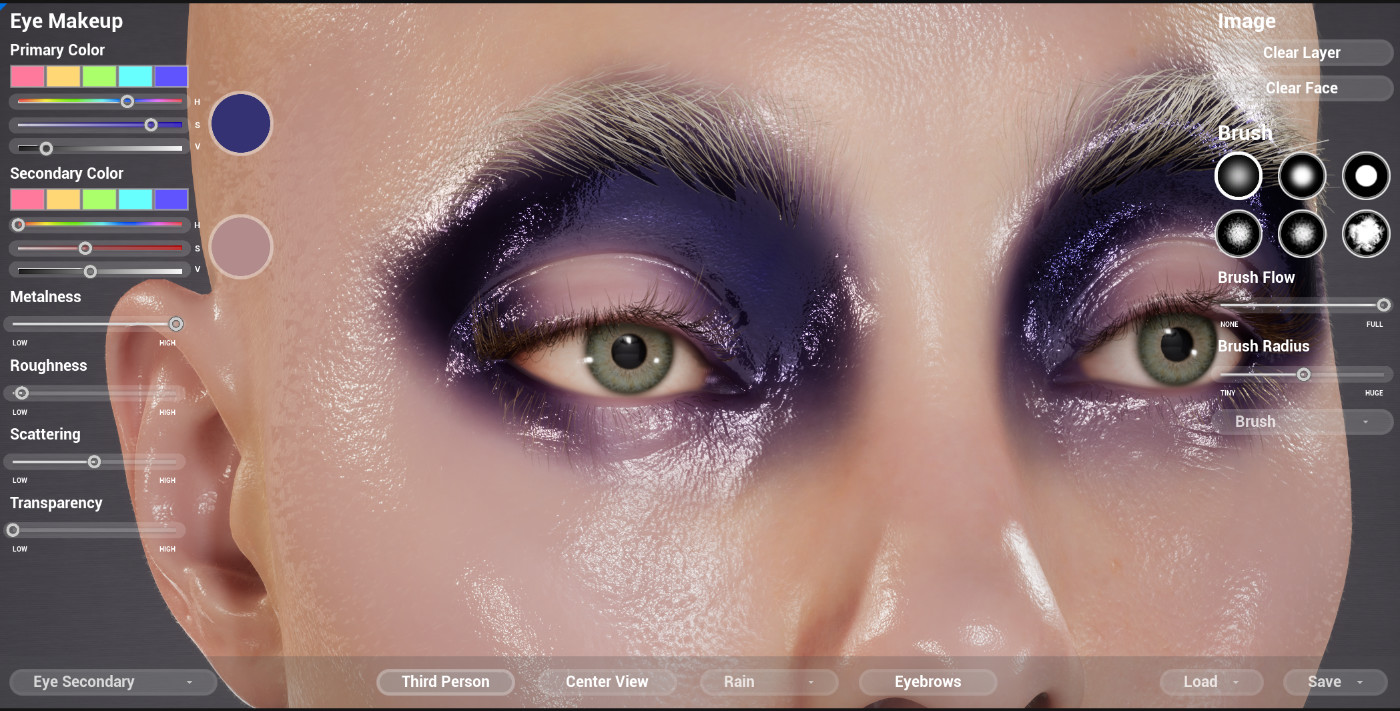
V-METICS is software that allows anyone to "apply real-world cosmetics to a digital human avatar in a 3D environment." This is a major game-changer for the cosmetics industry, as it can allow rapid experimentation without real-world constraints such as time or the need to physically apply and remove makeup. It goes way beyond AI-generated looks, applications that auto-apply makeup, or simply clicking buttons and moving sliders, however.
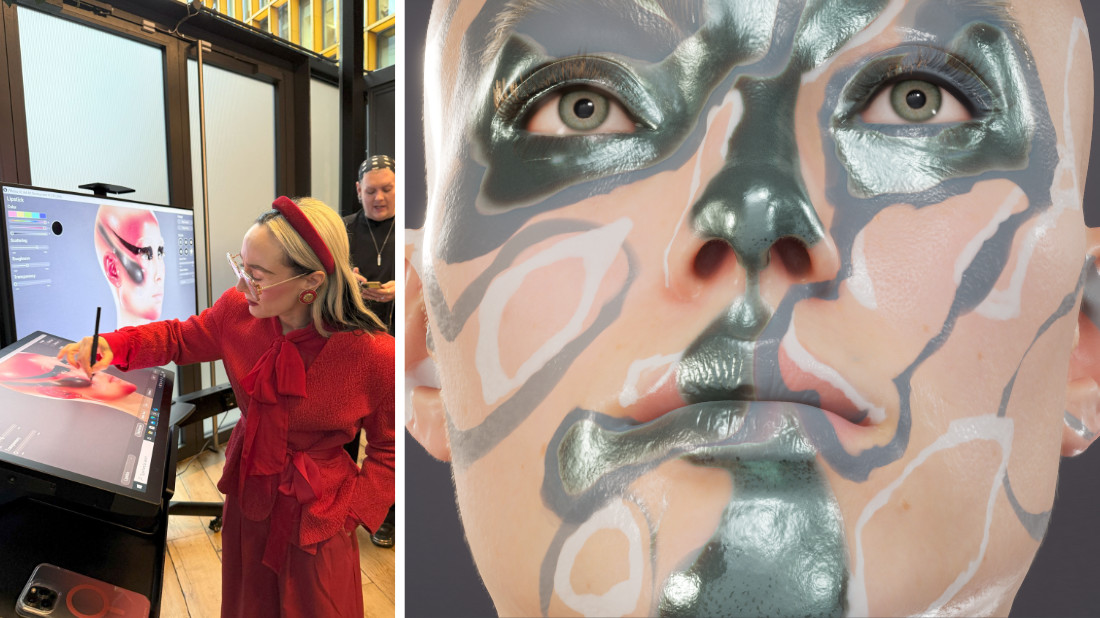
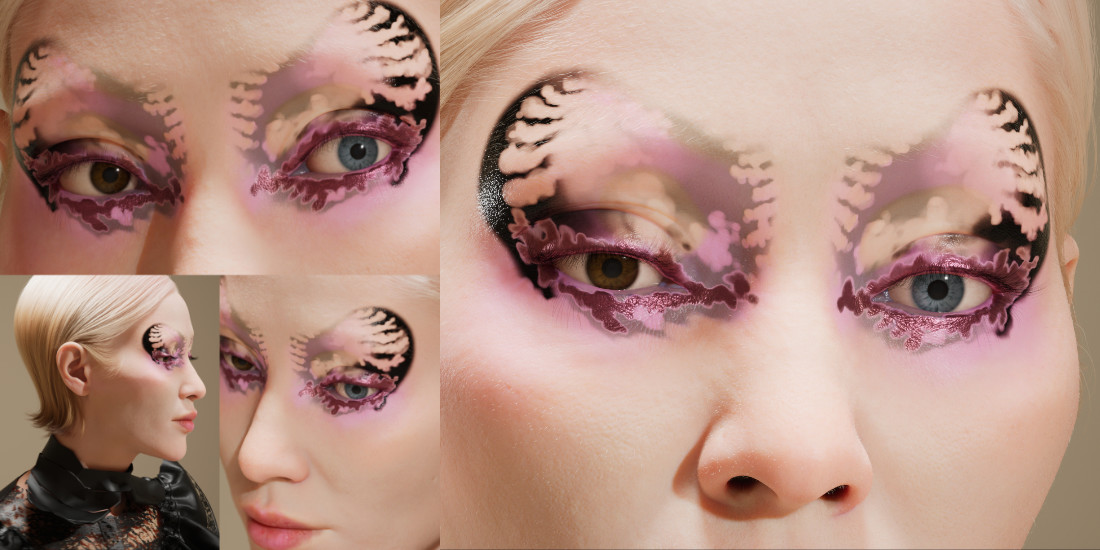
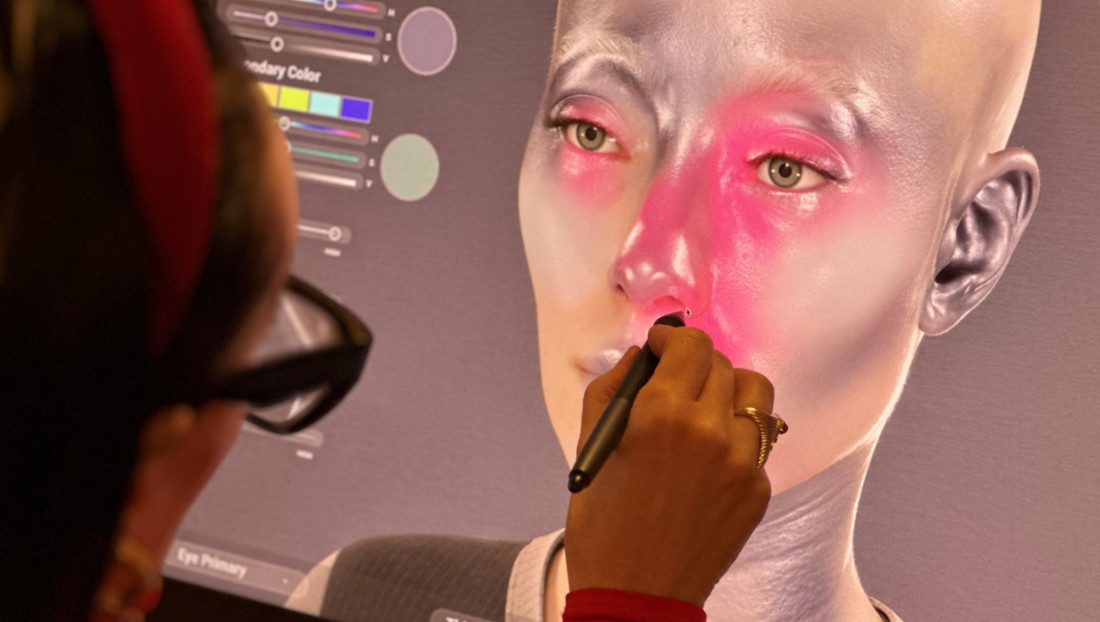
With V-METICS, a series of potential looks can be explored quickly – but, because V-METICS "accurately simulates the real physics of materials and light applied to the skin," it can utilize the power of Wacom precision to paint makeup intricately and intentionally, just like in real life. It harnesses the power of digital technology while keeping the essential human touch intact.
We spoke with Dr. Box about her background, her inspiration, and her work. That interview is below. Note: the following interview has been edited for length and clarity.
You were an early adopter with digital art and have been working with digital creative technology since the 90s. How were you first introduced to digital art, and what drew you to it?
I have always been curious about emerging techs possibilities to transform and transmogrify. Being born in the 70s and exposed to art and experimental music by my dad, listening to David Bowie and Brian Eno sonically shaped me. Anything seemed possible through art and technology.
How do you feel about art school? Would you recommend a young artist go to art school in 2026, or would they perhaps be better off teaching themselves?
Firstly, all further education should be free! I went to art school in 1991 and had a grant, which was an enormous privilege looking back. Kids now have so much anxiety, debt, and pressure before they even consider the arts. The art school era I inhabited was a time of friction, stumbling between the post 60s “starving artist as honorable” mantra trotted out by older lecturers, and the 90s YBA "loadsa money" mantra of Thatcher's kids.
Confusing times, but I flourished, largely down to the three key elements the art school environment brings – time, space and context. That is what art school enables; the time to develop a deeper practice with critical reasoning in a social context of fellow young artists. It’s a biome, and that’s very hard to do alone.
For someone who has been working with digital art tech for decades, much of your work over the years has been very physical – costumes, prosthetics, makeup, even experiential exhibitions that are tied to a time and place and physicality. How have you approached the relationship between the physical and the digital over the years?
The relationship is symbiotic because they are all facets of my communication and discourse with the world, resulting in my art as the semiotics of that coexistence. I’m going to drop the word "PHYGITAL" here, as it’s a perfect descriptor of what my work has become, the physical and the digital combined.
I see digital as I see clay, makeup or dance, a communication tool of raw expression. I’ve always been excited by expanding that expression dimensionally, joining fields of experience and expertise together through the seamless language of creation. There is now less separation between physical and digital, and that prismatic existence needs to be reflected in the tools we use to create. The problem is that we are in an age of polarity where everything is being pushed to extremes, unification is what is needed to answer both knowledge and tacit skills.
How have Wacom products facilitated your ability to bring the digital and the physical together?
V-METICS' mantra is "preserving the human hand in a digital era," and for an artist whose entire expression is through gesture and emotional application, Wacom creative pen tablets and displays provide that intuitive and seamless experience. Pairing our intuitive software tools with the Wacom Cintiq Pro has been a transformative experience. We have been out demoing to the education and artists community, seeing in real time how these tools can remove barriers to entry for traditionally trained artists and practitioners. This democratic approach has enabled new students and mature artists alike to jump into tech without hesitation.
You originally came to working with makeup almost by accident – by collaborating with a fashion designer on costuming and prosthetics. How did that happen, and how did you realize that you wanted to move into having a major emphasis on beauty and makeup in your work?
As a fine artist, my work was and is largely centered on the body and environment, movement and visual language. I have always naturally explored how to extend ,distort and transform the body which led to me experiment with prosthetics and cosmetics to support the desired effects and achieve the desired narratives. My early work was in performance and body transformation that drew parallels with artists like Rebecca Horn, Cindy Sherman and Matthew Barney. I examined the beauty and fashion world as motif and metaphor, and this drew attention from the 'actual' fashion world.
My first show drew designers and fashionistas interested to see the discourse of identity and fashion from this young installation artists perspective. A fellow artist introduced me to a brilliant young fashion designer named Philip Delamore, who was exploring similar themes at the cross section of art and identity, and he asked me to collaborate on an experimental fashion performance. The show at Milch Gallery in London was the first time someone called me a 'makeup artist .' Utilizing this 'living canvas’ enabled me to break down many barriers and communicate emotion and complex narratives much more widely and democratically than I could in conventional fine art practice.
You've spoken a lot about the relationship between makeup, fashion, identity, and self-expression, and have been called a "beauty futurist." What's on the horizon with respect to the beauty industry? How does what V-METICS is doing play a role?
What's on the horizon is beauty moving beyond a physical product to something that shapes identity and self-expression in new and emerging spaces. The future of beauty is intentional, collaborative, and creator-led. It’s about forging a new language between creators, brands, and digital marketplaces. One built on transparency, shared value, and real participation. It’s about tools like the ones we are developing at V-METICS that educate and train the next generation, while setting new industry standards for how appearance is captured, rendered, and trusted.
Assets won’t live in silos anymore; they’ll move fluidly across platforms and industries, carrying authorship and meaning with them. Creators and brands will unlock entirely new IP and licensing models, and digital-only product releases will become a means to reduce waste, lowering risk and environmental impact.
About the artist
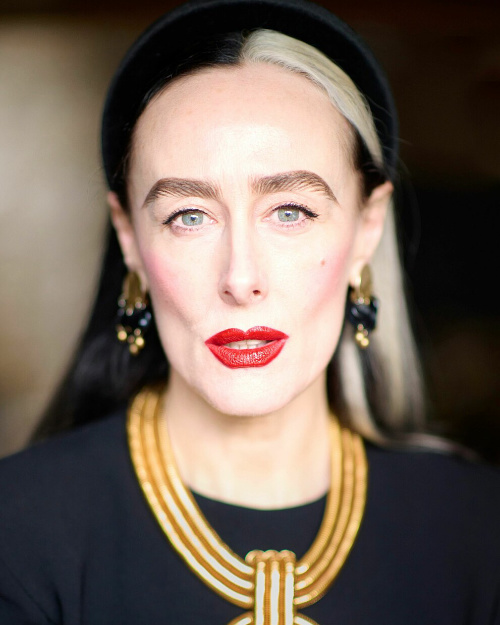
Dr. Alex Box is a visionary artist and pioneer of "Beauty Futurism," redefining creativity in make-up, beauty and identity. Blending art, science and technology, she is a leader in the discussion of how technology transforms identity in both digital and physical worlds.
As CEO of V-METICS, Dr. Alex Box is now transforming the virtual landscape with V-METICS, the first intuitive virtual cosmetics brand.
Follow her work on Instagram or check out V-METICS.com.