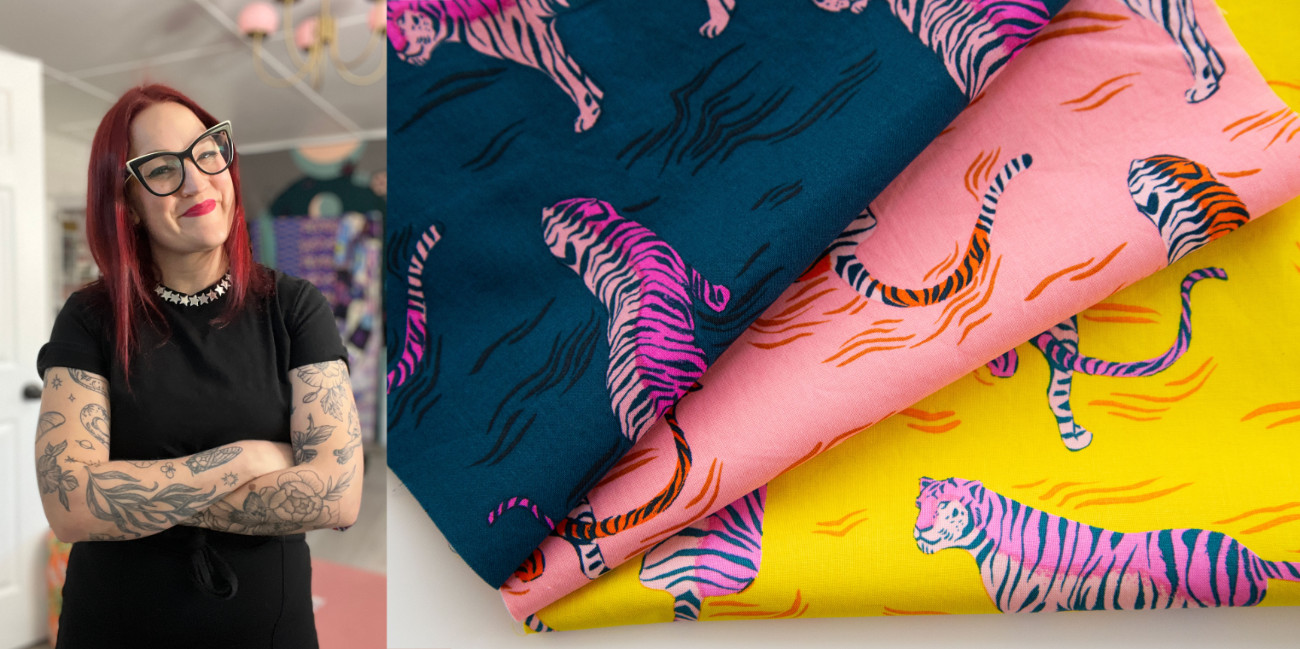
Many of us go throughout our lives without thinking too much about the various patterns and prints on surfaces and textiles all around us. But for the fashion and design conscious, and especially for sewists and quilters, they're everything – and basic, corporate, computer-generated prints will not do.
People who care deeply about the various patterns and prints they put together into quilts, clothing, and handmade products such as bags, totes, home goods, and accessories prize the handmade, intricately designed patterns by designers like Sarah Watts and those available through creative groups like Ruby Star Society.
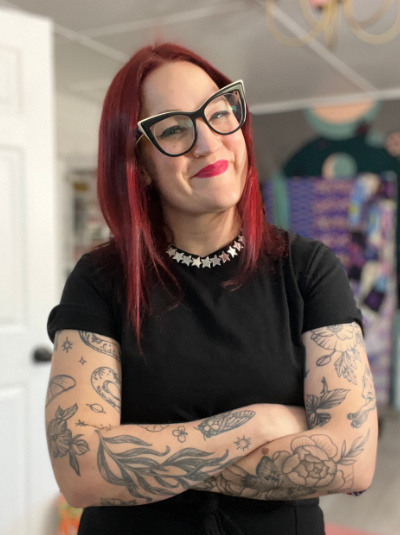
Sarah Watts is an illustrator, art educator, and surface designer for Ruby Star Society. She began in children’s fashion before launching her first fabric collection with Blend Fabrics and becoming a founding designer at Cotton+Steel. With Ruby Star Society, she’s created dozens of collections rooted in storytelling and play, and has collaborated with over 40 companies, including Target, Hallmark, and Penguin Books.
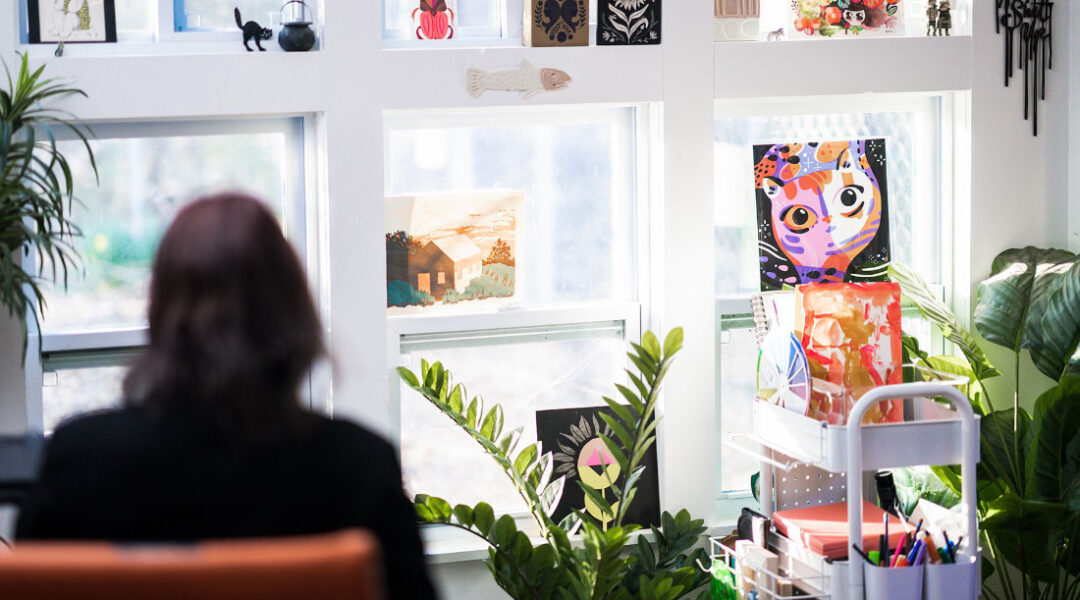
We love Watts' fun and beautiful designs, and as a longtime Wacom user, we wanted to learn more about her process, what inspires her, and how Wacom products factor into her workflow. So we got her one of the new Wacom Cintiq 16 pen displays, interviewed her, and worked with her on this video studio tour and artist feature about her background, influences, and process! Check out the video below and read on for the interview! Note: the below interview has been edited for length and clarity.
How did you discover your passion for art? Were you a creative kid?
I’ve been drawing since I could hold a pencil. Honestly, I think art chose me before I chose it. Growing up wasn’t always easy. Both of my parents struggled with mental health, and money was tight, but they were loving and always encouraged creativity. Art became my survival kit. Drawing was where I escaped, and eventually, it became practical, too.
In high school I started to sell art to help pay bills and buy school supplies for me and my brothers. Nothing like monetizing your passion at a young age, right? But it showed me early on that art could be both expression and livelihood. I took that seriously and never looked back.
You went to Ringling College for a degree in Illustration. Do you feel like art school is necessary for a creative career? Would you recommend it to young artists today?
I don’t think it’s required, but I personally needed it. I graduated with honors from Ringling College of Art and Design in 2008 with a BFA in Illustration. Getting there was its own adventure, with night jobs, applying for scholarships, and responsibilities at home. It was tough, but I was determined to make it happen.
Art school gave me confidence, community, and belief in my own creative voice. I needed a new environment where I could see the world differently. My early experiences were heavy, and being immersed in a deep creative community helped me learn a new normal. I met incredible people and made lifelong friends. The instructors in the illustration department at Ringling are some of my greatest mentors. Some of us Ringling friends still get together to this day.
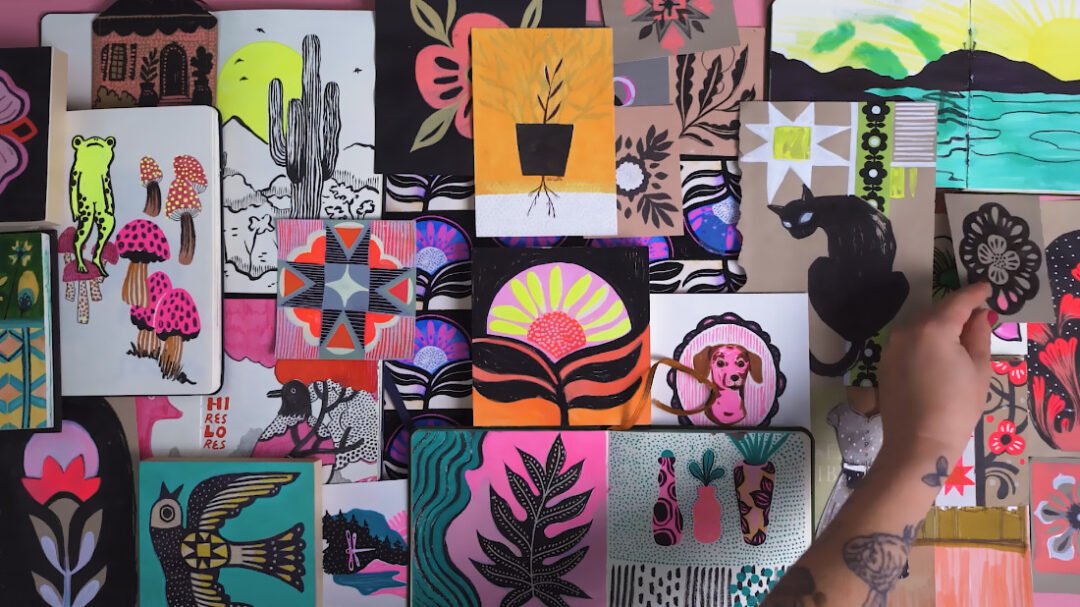
That said, art school isn’t the only path. Some of my most successful friends are self-taught. These days, online classes, including my own From Paint to Pattern and Sketchbook Squad, make it possible to learn surface pattern design from your home, which is a big win. We have so many resources now. I’m constantly taking new classes myself. Learning keeps creativity playful and curious. As art becomes a way of living, it’s so important to keep that sense of play. We have to keep filling up our creative buckets to make new work.
You’ve done greeting cards, apparel, books, fabric, and teaching. Do you consider one your main pursuit?
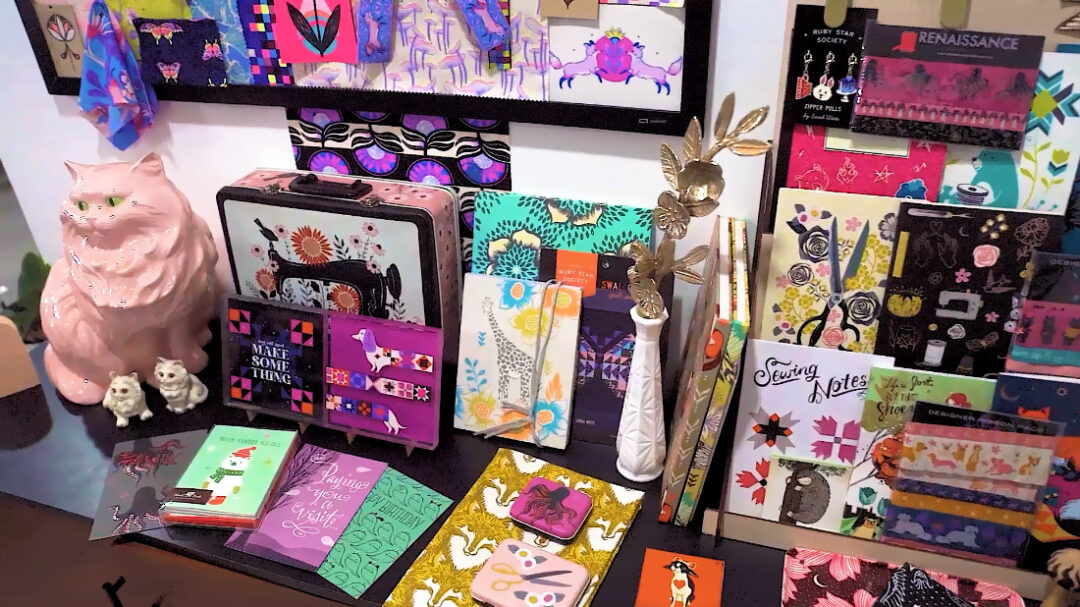
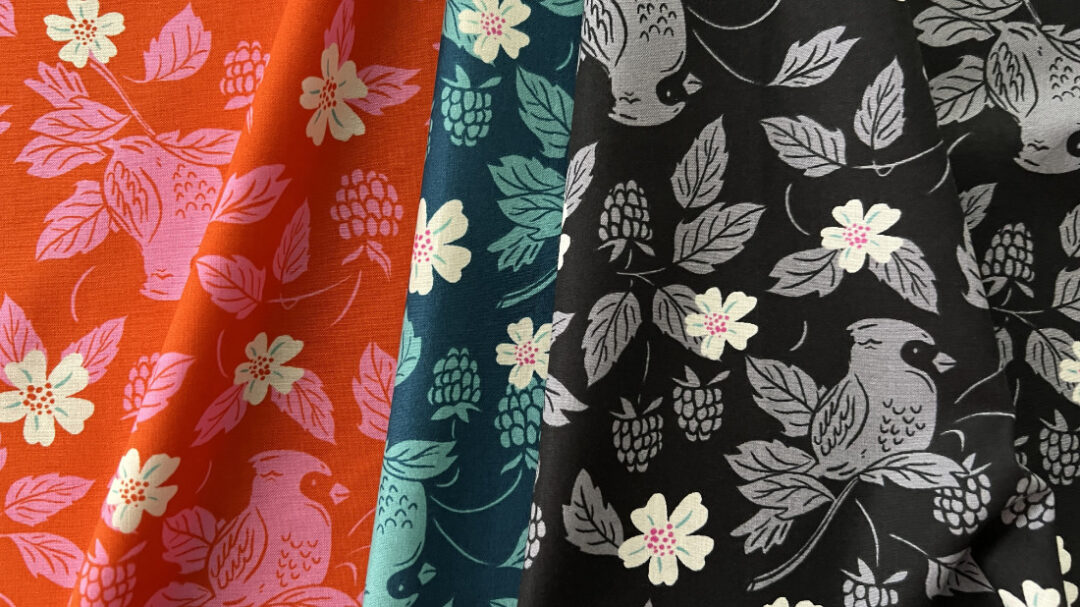
Fabric, 100%! Designing fabric is my creative heartbeat. It’s where illustration, storytelling, and community come together in the best way. The sewing industry is where I make most of my income, along with teaching how to design fabric.
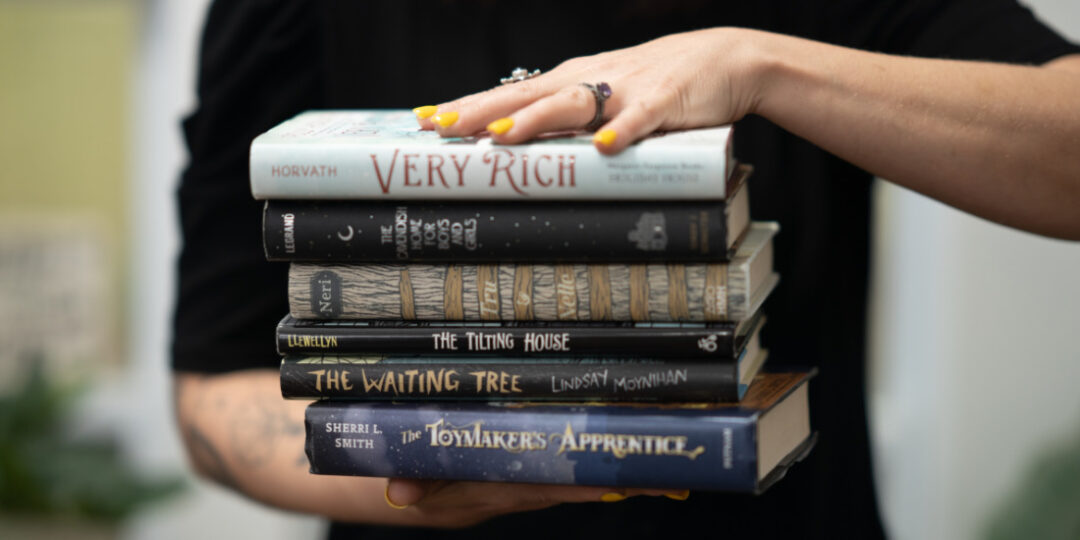
In my twenties, I explored all kinds of licensing. I exhibited at Surtex and worked on bags, puzzles, apparel, and more for companies like Hallmark and Target. I was also illustrating children’s books through the amazing literary agency Red Fox Literary, and we worked together on middle grade and YA books with Simon & Schuster, Penguin, HarperCollins, and others.
But fabric has always held a special kind of magic for me. Designing with Ruby Star Society is very collaborative, and it embodies the same collaborative spirit found in sewing. There’s nothing like watching drawings leave the sketchbook and transform into quilts, clothes, and family heirlooms. It never gets old. The sewing community is wildly enthusiastic.
Also, a new generation is discovering quilting and sewing, and seeing them remix my fabric into their own art feels like the coolest collaboration ever. It’s also incredibly heartwarming. Watching people come together in sewing classes or at QuiltCon, a big public quilt convention we attend every February, and sharing their projects online to connect with the larger community – it’s the best feeling.
How have Wacom products factored into your creative journey?
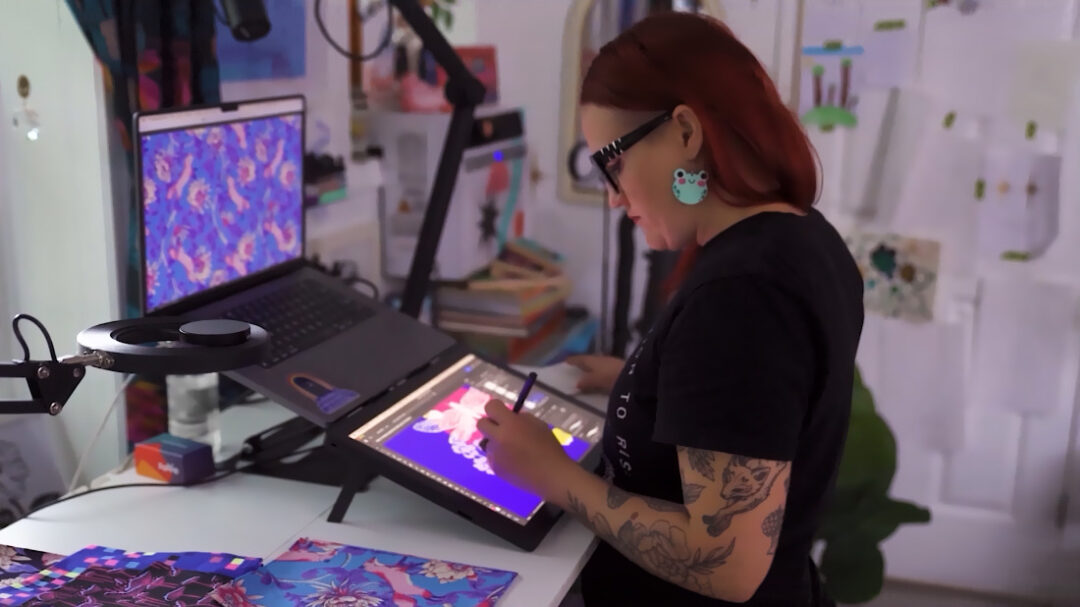
Wacom has been part of my process for 20 years. I’m a big fan! My husband, who is a photographer, and I have built a little collection of Wacom devices over time. I first learned how to use one in high school, and once I paired it with Photoshop it was a total game-changer. When I got to college, it was the standard in our studio classes.
I’m a sketchbook artist first, and Wacom lets me carry that same energy into digital work. The strokes feel natural, and I can test colorways, repeat layouts, and make variations quickly, which is essential for fabric design. I just got the new Wacom Cintiq 16 pen display and it’s incredible. The screen has no drag, the colors are crisp, and the brush settings work seamlessly with the pen. Drawing directly on it feels like working in a sketchbook, with the added power to zoom, scale, and refine. I’m smitten!
Did you ever pursue a traditional role, or have you always worked independently?
Ohh, good question! I began my career in corporate art departments. First at Carter’s, where I learned the nuts and bolts of surface design, from repeats and embroidery to apparel graphics and trend research. I learned how to work with an art director, collaborate with a team, and design baby clothes. I used to get teased for listening to metal music while drawing adorable cats, actually! Honestly, I thought it was the perfect combo. Working in an art department was like grad school with a paycheck.
Then I joined a gift company, where I designed for places like Michael’s and Target. Both in-house jobs were incredible learning experiences, but I didn’t thrive with the set hours. I wasn’t meant for the corporate world.
My heart was itching to do my own thing. I had stories to tell, I wanted to reuse my artwork, and I wanted to work on a wider range of projects. At Carter’s I heard about Surtex, the big art licensing trade show in New York, and I swore I’d get there one day. In 2013, I did! I exhibited for two years, landed some solid licensing gigs, and realized I could make the freelance life work. It’s not easy, but if you want something badly enough, you can build the skills and confidence to make it happen.
That said, the entrepreneur path often turns out to be more business than art, so I have to be mindful of balance. I’m also a mom to two awesome kids, so protecting my energy is a big part of the equation.
Why is community important to you?
We all need hugs and friends and people who get our passions. Community has always been my safety net and kept me from being a complete hermit. A lot of us artists like to work in caves, essentially! As a kid, I leaned on friends and neighbors when things were tough at home. As an adult, I’ve found that same lifeline in creative circles.
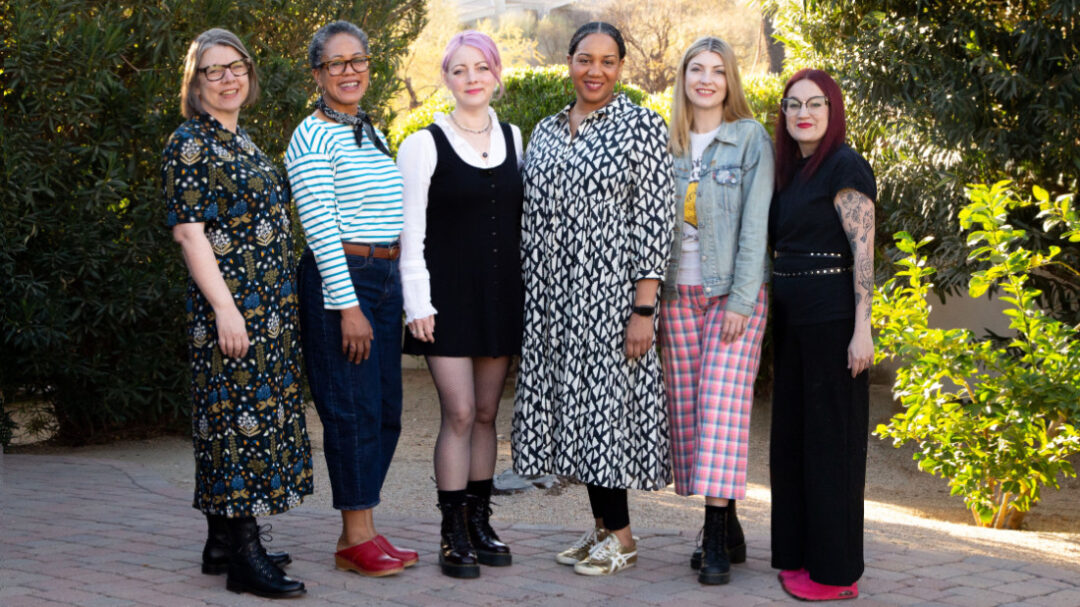
The sewing and quilting community is one of the kindest, funniest, most generous groups I’ve ever met. I design fabric with Ruby Star Society, a collaborative group of women designing fabric for the home sewing industry. Together we collaborate on group collections and create about two solo collections each per year. With Ruby Star Society, I get to design fabric that becomes part of people’s stories, like wedding quilts, baby gifts, and memory pieces. That’s the good stuff.
Also, creatives are hilarious. We see the world a little sideways, in the best way, and it helps to find people who understand that. Not everyone will, and that’s okay. Find your circle. Keep it kind. Keep it curious.
Community doesn’t have to be huge either. My husband Scott and our kids, Willow and Violet, are a tiny community. My teammate Jane, Ruby Star Society, my art friends, my students, and the sewing world are all communities. I’ve always had pockets of family. One of the best things I’ve realized is that you can have little pockets of close friends who fill up different parts of your life. Some days I need to bond with my parenting friends. Some days I need to draw with my art friends.
What advice would you give to early career creatives?
First, make tons of art, and don’t wait for it to be perfect! It never will be. Fall in love with the process, not just the results. Also, protect your energy. Don’t let social media convince you that your worth equals your likes. The world needs your quirks, your odd little doodles, and your voice, not a copy of someone else.
Finally, find community. Join an online class. Sit in a coffee shop and draw. This career is amazing, but it can be lonely. Surround yourself with people who get it. We all have those family members who ask, “So what is it that you do again?”
Do you have anything coming up that readers should look out for?
Yes! My Alice in Wonderland–themed fabric collection is shipping to quilt shops soon from Ruby Star Society. I’m also part of an advent calendar project that I'm excited to reveal with Stitch Supply Co.
On the business side, I recently signed with Tantau Studio for art licensing, so you’ll start seeing my work on all kinds of products. Margo, my agent, is an incredible presence in the gift industry, and has been championing artists for a long time. I’m excited to see what we do together.
And the teaching side never sleeps. Sketchbook Squad is my drawing membership where I teach students drawing foundations for the gift and pattern world. I also teach Photoshop extensively for creating patterns in From Paint to Pattern, which will reopen again in spring 2026. For a sneak peek, check out my free PDF and YouTube series where I teach flower drawing. Come hang out, we make art, we laugh, and occasionally I spill coffee on my sketchbook.
Best place to keep up with me is on Instagram at @wattsalot and my art newsletter on Substack!
About the Artist
Sarah Watts is an illustrator, art educator, and surface designer for Ruby Star Society. Growing up with limited means, Sarah leaned on her imagination – spending childhood days drawing, inventing, and making art out of nothing. By high school, she was selling posters and storefront paintings to help with family bills, and realized art could be her career.
After earning a degree in illustration from Ringling College, she began in children’s fashion before launching her first fabric collection with Blend Fabrics and becoming a founding designer at Cotton+Steel. Now with Ruby Star Society, she’s created dozens of collections rooted in storytelling and play, and has collaborated with over 40 companies, including Target, Hallmark, and Penguin Books.
Sarah also teaches Photoshop, surface design, and drawing to hundreds of students through her flagship course From Paint to Pattern and her sketchbook membership, Sketchbook Squad. She recently launched Craftedmoon, a sewing-themed stationery brand, made for crafty homebodies who love cats, creativity, and a little mischief. She also shares free art tips and behind-the-scenes content in her Substack newsletter. Follow Sarah's work at her website, Ruby Star Society's, or Craftedmoon's, by joining her Substack, or by following her on TikTok or Instagram!