It's May, which means countless art school students across the United States – and the world! – are moving from educational environments and starting to look for creative careers. Freelancers, amateurs, and pros around the world are also looking to get art jobs. One thing that all these creative job searches share is the portfolio. But it can be difficult to know exactly how to prepare your portfolio for the best chance of job search success!
We've published a couple of portfolio guides in the past – check out this post about preparing your portfolio and this one about hosting it – but we've recently been in conversation with Ellen Su, and she graciously agreed to share some of her wisdom about the portfolio process with us.
Ellen Su is the co-founder of STUDIO MOONMOON and a Creative Director at NATHAN LOVE. She was previously the Head of Artistic Recruiting at Titmouse, and has recruited on shows like Jentry Chau vs. The Underworld, The Legend of Vox Machina, Star Trek Lower Decks, Kiff, and more.
With all of her experience, she recognized that she could help young and beginning artists with advice for how to prepare their portfolios. So she created the guide you find below! It's based on animation – her specialty – but the tips and truths will apply to job seekers across creative industries.
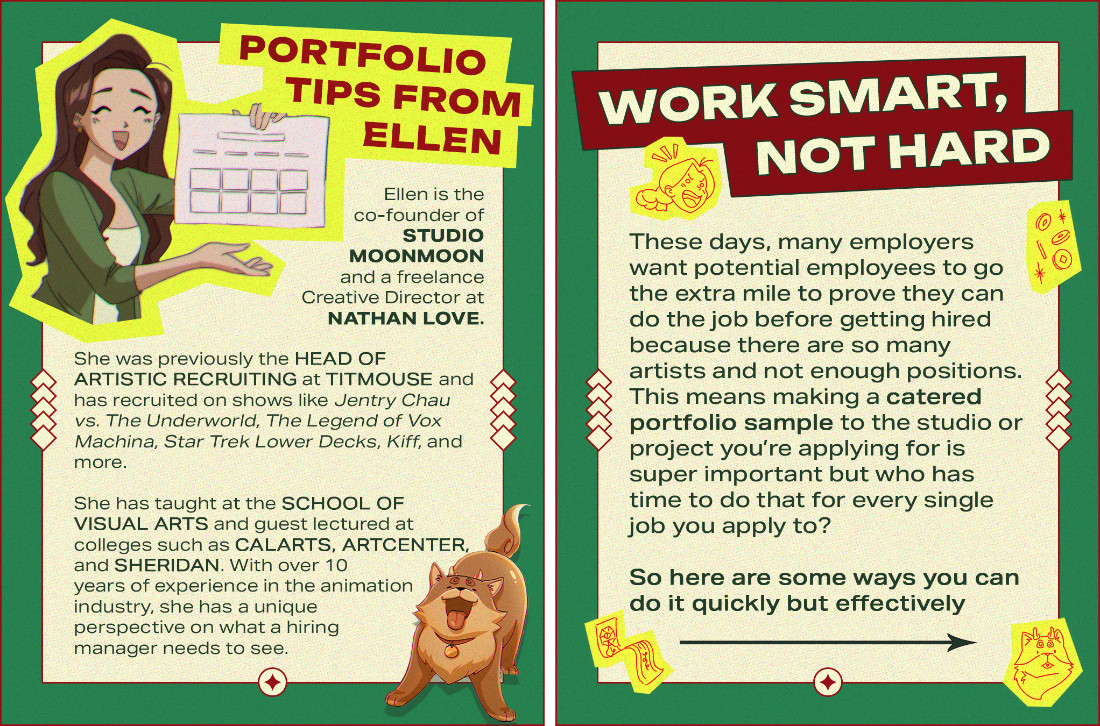
Work smart, not hard!
These days, many employers want potential employees to go the extra mile to prove they can do the job before getting hired because there are so many artists and not enough positions. This means making a portfolio sample catered to the studio or project you’re applying for is super important, but who has time to do that for every single job you apply to?
So here are some ways you can do it quickly but effectively!
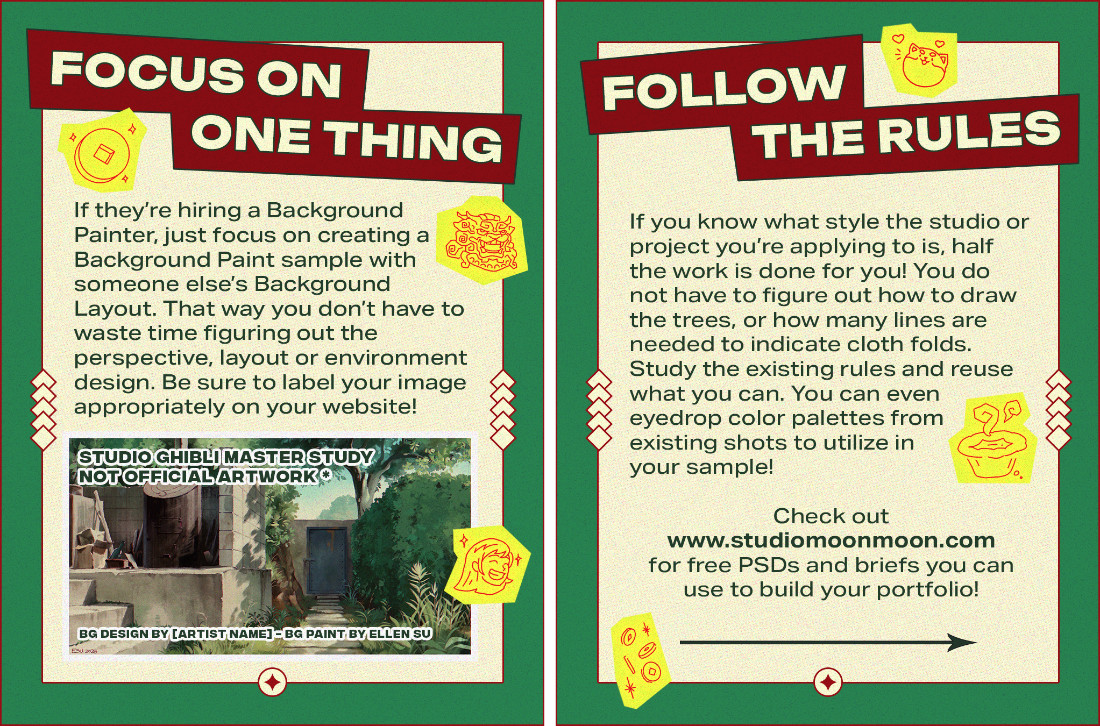
Tip 1: Focus on one thing
If they’re hiring a Background Painter, just focus on creating a Background Paint sample with someone else’s Background Layout. That way you don’t have to waste time figuring out the perspective, layout or environment design. Be sure to label your image appropriately on your website!
Tip 2: Follow the rules
If you know what style the studio or project you’re applying to is, half the work is done for you! You don't have to figure out how to draw the trees, or how many lines are needed to indicate cloth folds. Study the existing rules and reuse what you can. You can even eyedrop color palettes from existing shots to utilize in your sample!
Check out STUDIO MOONMOON for free PSDs and briefs you can use to build your portfolio!
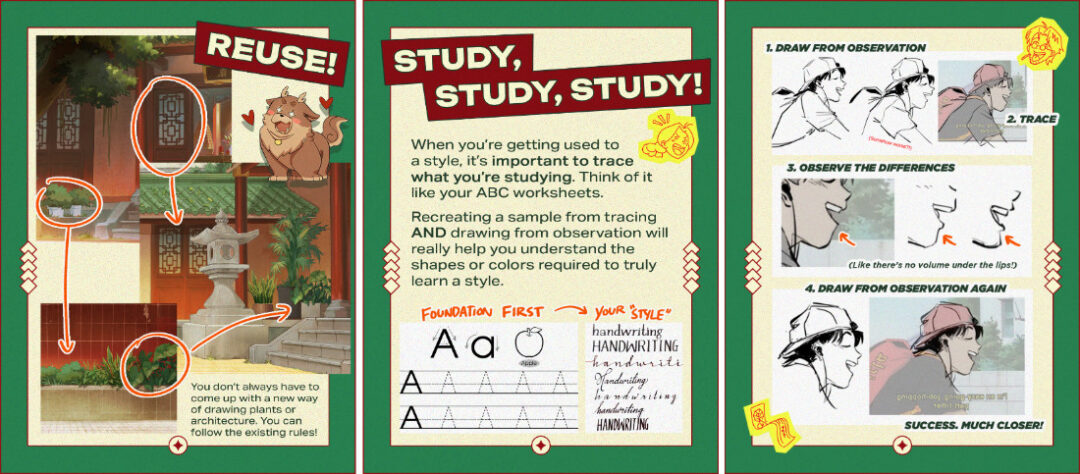
Tip 3: Reuse!
You don’t always have to come up with a new way of drawing plants or architecture. You can follow the existing rules!
Tip 4: Study, Study, Study!
When you’re getting used to a style, it’s important to trace what you’re studying. Think of it like your alphabet worksheets. Recreating a sample from tracing AND drawing from observation will really help you understand the shapes or colors required to truly learn a style. Start with foundations first, and from there you can build your own style. Here's a great process to do that:
- Draw from observation
- Trace
- Observe the differences (like there’s no volume under the lips!)
- Draw from observation again
- Success. Much closer!
Tip 5: Pick three! Three is a magic number!
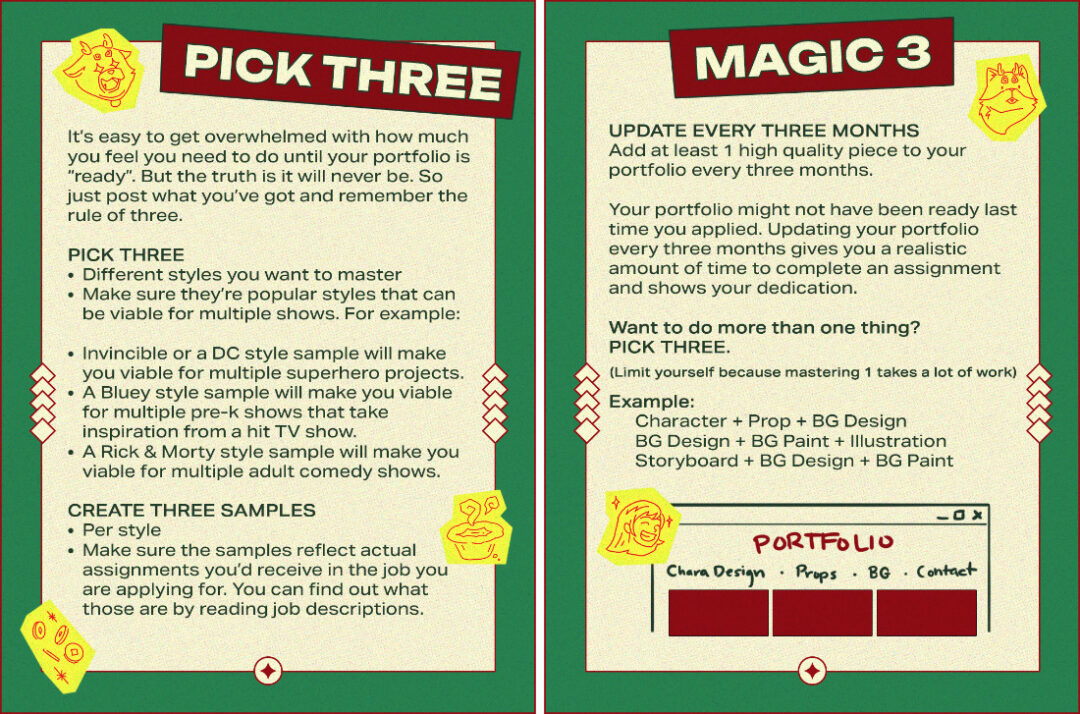
It’s easy to get overwhelmed with how much you feel you need to do until your portfolio is “ready." But the truth is, it will never be truly ready! So just post what you’ve got, and remember the rule of three.
Pick Three different styles you want to master. Make sure they’re popular styles that can be viable for multiple shows. For example:
- An Invincible or a DC style sample will make you viable for multiple superhero projects.
- A Bluey style sample will make you viable for multiple pre-K shows that take inspiration from a hit TV show.
- A Rick & Morty style sample will make you viable for multiple adult comedy shows.
Create three samples per style. Make sure the samples reflect actual assignments you’d receive in the job you are applying for. You can find out what those are by reading job descriptions.
Update your portfolio every three months. Add at least one high quality piece to your portfolio every three months. Your portfolio might not have been ready last time you applied. Updating your portfolio every three months gives you a realistic amount of time to complete an assignment and shows your dedication.
Want to do more than one thing? Pick three! Limit yourself, because mastering one takes a lot of work. For example:
- Character design + Props + Background design
- Background design + Background Paint + Illustration
- Storyboard + Background design + Background Paint
Tip 6: Prime real estate
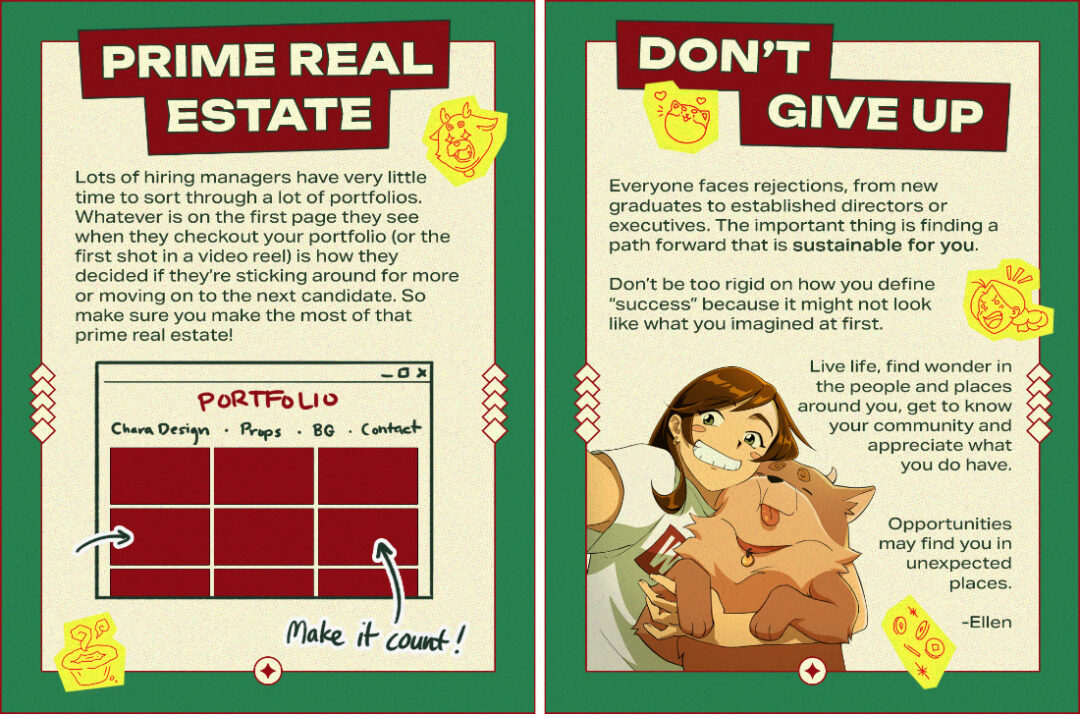
Lots of hiring managers have very little time to sort through a lot of portfolios. Whatever is on the first page they see when they checkout your portfolio (or the first shot in a video reel) is how they decided if they’re sticking around for more or moving on to the next candidate. So make sure you make the most of that prime real estate!
Tip 7: Don't give up!
Everyone faces rejections, from new graduates to established directors or executives. The important thing is finding a path forward that is sustainable for you. Don’t be too rigid on how you define “success,” because it might not look like what you imagined at first. Live life, find wonder in the people and places around you, get to know your community, and appreciate what you do have. Opportunities may find you in unexpected places!
Ellen also did a livestream on the Studio MoonMoon YouTube channel about this same topic! Watch that below:
Feature image for this blog post is by Anete Lūsiņa and accessed via Unsplash.

About the artist:
Ellen Su is the co-founder of STUDIO MOONMOON and a Creative Director at NATHAN LOVE. She was previously the Head of Artistic Recruiting at Titmouse, and has recruited on shows like Jentry Chau vs. The Underworld, The Legend of Vox Machina, Star Trek Lower Decks, Kiff, and more.
She has taught at the School of Visual Arts and guest lectured at colleges such as CalArts, ArtCenter, and Sheridan. With over 10 years of experience in the animation industry, she has a unique perspective on what a hiring manager needs to see.